
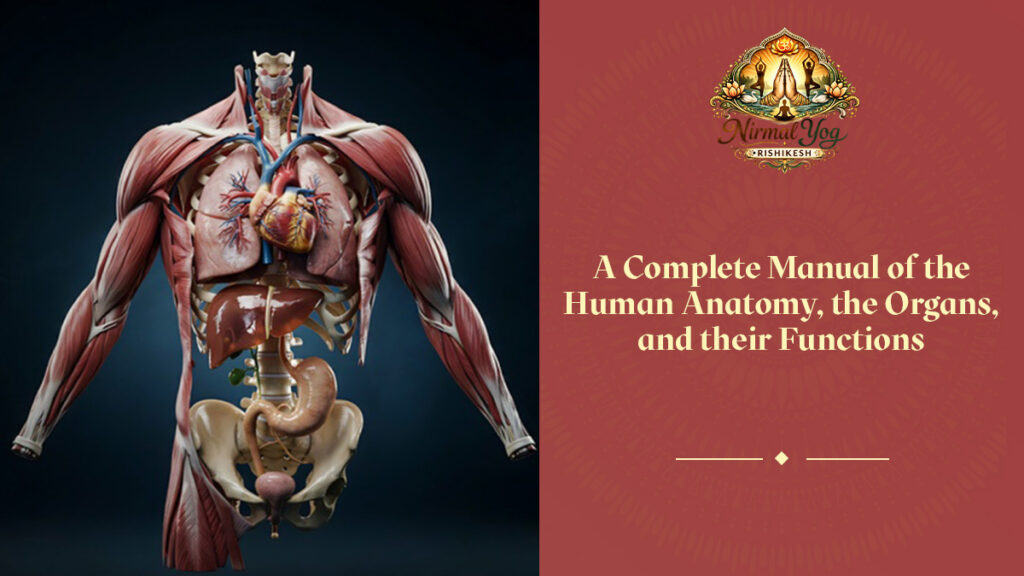
The human body is a wonderful biological machine. It is made up of billions of cells, specialized tissues, and vital organs, all working in perfect harmony to keep us alive. Each beat, each breath, each motion depends on a system of systems functioning in perfect synchrony. Medical professionals use their understanding of the anatomy of the human body to diagnose and treat diseases. Students, fitness buffs, and anyone interested in health can understand their body functions better.
Having a basic idea of the structure of the body can make complex biological concepts much easier to understand if you are viewing a diagram of a human body for educational purposes or trying to learn about the organ anatomy of human beings.
In this guide we shall explore the major body systems, the anatomy of organs of the human body, their functions, and why anatomy is still one of the most important fields in medicine and science.
What Is Human Body Anatomy?
Human body anatomy is the study of the body’s physical structure, including its organs, muscles, bones, tissues, and cells. Anatomy is the study of what the body is made of. Physiology is the study of how the parts of the body work. Together, these sciences help us understand how the human body develops, adapts, heals, and responds to disease.
Anatomy has been the basis of medical education for centuries. Early anatomists studied the body through careful observation and dissection of cadavers. Advanced imaging technologies like MRI scans, CT scans, and X-rays allow doctors to see inside the body at internal organs without surgery. This speeds up and improves the accuracy of diagnosis.
Anatomy is not only important for medicine. It is also important for physiotherapy, sports science, fitness training, yoga, rehabilitation, and complementary therapies such as acupuncture.
Understanding the Human Body Systems
The human body has a number of organ systems that do a particular function. These systems are not isolated, and they constantly interact with each other to keep the balance or homeostasis.
Here are the major systems of the body:
- Skeletal System
- Muscles
- Nervous System
- Circulatory System
- Respiratory System
- Digestive System
- Endocrine System
- Urinary Tract
- Reproductive System
- Integumentary System
For example, the skeletal system gives structure and protection to the internal organs, and the muscular system allows movement. The nervous system coordinates communication throughout the body, and the circulatory system supplies oxygen, nutrients, and hormones to each cell.
When you see all these systems together in a diagram of the human body, it really shows you just how interconnected the body is!
Why a Human Body Diagram Is Useful
One of the easiest ways to understand where organs are located and how they relate to one another is with a diagram of the human body. Medical students, teachers, health professionals, and even patients often use anatomical diagrams for organ identification, body system study, and understanding of medical conditions.
Front and back body diagrams can show the location of organs, including the heart, lungs, liver, kidneys, stomach, intestines, and reproductive organs. Learning names is so much less exciting than these visual clues in learning anatomy.
Organs of Human Body and Their Functions
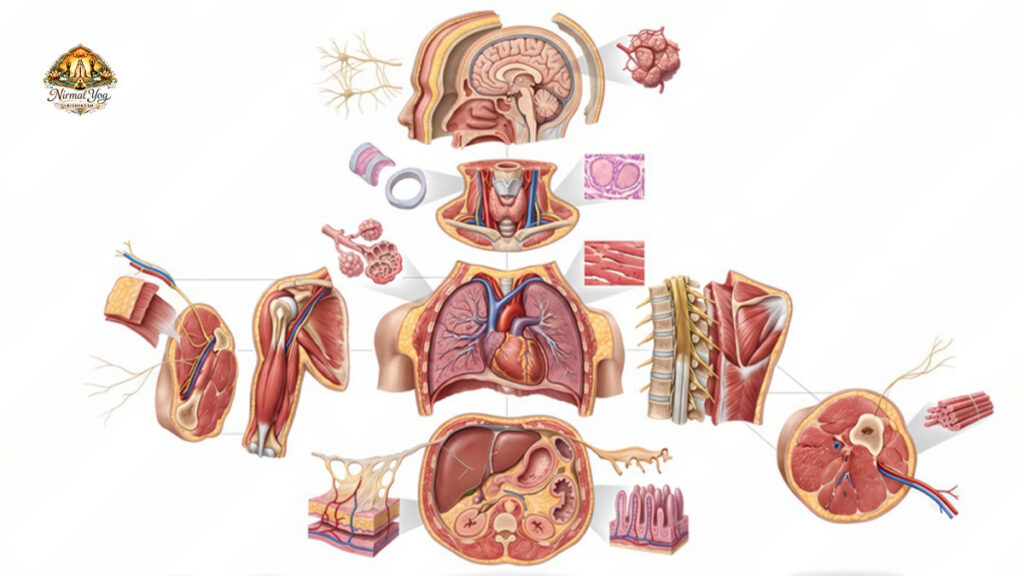
The anatomy of the human body demonstrates how every organ has a unique responsibility that contributes to overall health. Below are the major organs and the roles they perform.
Brain – The Body’s Control Center
The brain is perhaps the most complex organ in the human body. It processes information. It controls movement. It regulates emotions. It stores memories. It controls countless automatic functions like breathing, heartbeat, etc. All of that is done through the nervous system.
The brain is composed of several specialized areas:
- Cerebrum: It controls thought, reasoning, language, decision-making, and voluntary movement.
- Frontal Lobe: Controls planning, judgement, and personality.
- Parietal Lobe: Touch, temperature, and spatial awareness processing.
- Temporal Lobe: Hearing, language, and memory.
- Occipital Lobe: Interpretation of visual information.
- Cerebellum: Controls balance, posture, and smooth movements.
- Brainstem: It controls basic body functions such as breathing, heart rate, and reflex actions.
- Limbic System: Includes the hippocampus and amygdala; functions in memory and emotions.
Studying the human brain organ anatomy allows scientists to have a better understanding of neurological disorders, mental health, and cognitive function.
Heart – The Body’s Pump
Your heart is a powerful muscle that sends oxygen-rich blood around your body. It beats about 100,000 times on an average day. It supplies oxygen and nutrients to the tissues and removes carbon dioxide and waste products.
If the circulatory system is not working properly none of the organs in the body can survive.
Lungs – Supporting Every Breath
Gas exchange takes place in lungs. Oxygen is pulled into the blood and carbon dioxide is pushed out of the blood.
The lungs and the heart work together to get oxygen to every cell so that it can produce energy.
Liver – The Body’s Chemical Processing Plant
The liver performs hundreds of vital jobs every single day. It removes toxins from the blood, stores nutrients, makes bile to help digestion, and helps process carbohydrates, proteins, and fats.
The liver is one of the toughest organs in the body because of its incredible capacity to regenerate.
Kidneys – Natural Blood Filters
The kidneys constantly filter waste products from the blood to make urine. They also help control:
- Balance of fluid
- Blood pressure
- Electrolytes
- Acid Base Balance
Healthy kidneys are crucial to the body’s internal environment.
Stomach – Beginning the Digestive Process
The stomach breaks down food into smaller particles with digestive acids and enzymes as the food moves into the small intestine. This means that the nutrients can be more easily absorbed later on in the digestive process.
Small and Large Intestines
Usually these organs are grouped together, but they have different responsibilities.
Small intestine:
- Absorbs nutrients from food
- Further breakdown of food
- Carries vitamins and minerals into the bloodstream
Large intestine:
- Water absorption
- Stool shape
- Waste is removed from the body
Together they are vital for digestion and overall health.
Skin – The Largest Organ
Many people forget that the skin is actually the body’s largest organ. It protects us from harmful microorganisms, regulates temperature, prevents excessive loss of water, and allows us to feel touch, heat, and pain.
Healthy skin is also the body’s first line of defence against the external environment.
Why Anatomical Terminology Matters
Doctors learn to use some standard anatomical terms. In anatomy, we use universal terms of direction for different situations, not “left” or “right.”
Some common examples include:
- Anterior – Front of the body
- Posterior – Back of the body
- Medial – Toward the center
- Lateral – Away from the center
Consistent terminology is important to avoid confusion in diagnosis, surgery, medical imaging, and research.
Why Human Anatomy Is Important in Microbiology
A solid understanding of human body anatomy is especially valuable in microbiology because microorganisms often target specific organs and tissues.
Like:
- Tuberculosis mostly affects the lungs
- Hepatitis is an attack on the liver
- Some bacteria infect the digestive tract
- Some viruses infect the nervous system
Understanding the location and function of organs helps microbiologists understand how infections spread, how diseases develop, and what treatments may work best.
Anatomy also helps laboratory professionals identify tissue samples, interpret blood tests, and understand immune responses involving organs like the spleen, bone marrow, and lymph nodes.
Advanced and Comparative Anatomy
Advanced anatomy explores the body’s structures in greater detail, from microscopic cells to entire organ systems. Medical students often combine textbook learning with imaging techniques and cadaver dissection to gain a complete understanding of the body.
Comparative anatomy, on the other hand, examines similarities and differences between humans and other animals. Comparing skeletons, muscles, and organs across species provides valuable insights into evolution, movement, and biological adaptation.
Why Learning Human Anatomy Matters
Anatomy is something to learn, not just for doctors. It is good for anyone who is interested in improving their health and learning about how the body works.
A good knowledge of anatomy can help you:
- Make smart health choices
- Get information on diseases and treatments
- Improve exercise form and decrease risk of injury
- Better Posture & Movement
- Lay a stronger foundation for a career in health care, nursing, physiotherapy, sports science, or fitness.
Even a basic knowledge of anatomy can make interactions with health care providers that much easier to understand.
Final Thoughts
Human body anatomy is a spectacular example of engineering by nature. All organs, tissues, and systems of our body have a specific function, but they all work together to keep us healthy and functioning every day.
If you are studying a diagram of the human body, looking at the organ anatomy of humans, or learning about the anatomy of the organs of the human body, understanding these structures gives you a deeper appreciation for the complexity of the human body. An understanding of anatomy gives us better tools to care for our health, to avoid disease, and to choose the right lifestyle.
Frequently Asked Questions (FAQs)
Human body anatomy is the study of the body’s structure, including organs, bones, muscles, tissues, and cells. It explains how these parts are organized and how they work together to support life.
A human body diagram helps students, healthcare professionals, and patients visualize the location of organs and body systems, making anatomy easier to understand and remember.
Some of the most important organs include the brain, heart, lungs, liver, kidneys, stomach, intestines, and skin. Each performs specialized functions necessary for survival.
Anatomy is the study of the structure of the body. Physiology is the study of how those structures function , and how they work together to keep us healthy.
Knowledge of human anatomy helps physicians diagnose illnesses, perform operations, interpret medical tests and teach patients. It is also useful for students, athletes and fitness professionals.