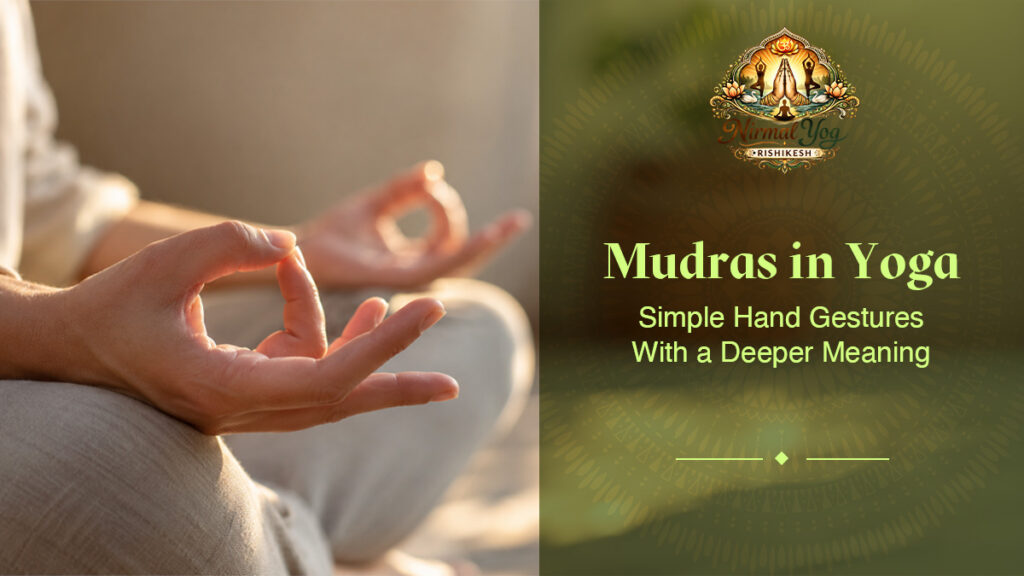
If you’ve ever entered a yoga class and seen someone sitting quietly with their hands in a certain position, you might have wondered what they were up to. These positions of the hands are called mudras. At first glance, they may look like just a few fingers touching each other. But in yoga, mudras are much deeper. They have traditionally been used in pranayama and meditation to help focus the mind, increase awareness, and turn the mind inward. And the best part is, you don’t need to be an experienced yogi to give them a try. You can sit on a chair, cross-legged on the floor, or even on the edge of your bed and practice a simple yoga mudra for a few minutes. What is mudra in yoga, and why are they part of so many yoga and meditation practices? So let’s get into it.
What Is Mudra in Yoga?
The word mudra comes from Sanskrit and is commonly translated as a “gesture,” “seal,” or “sign.” In the yogic tradition, a mudra is a particular gesture or position used as part of a practice. Although mudras can involve different parts of the body, hand mudras are the ones most people are familiar with. If you’ve ever brought your palms together at the end of a yoga class, you’ve already used one.
Mudras are traditionally understood as a way of influencing the flow of prana, or vital energy, and directing awareness inward. Different mudras have different associations, and their meanings can vary somewhat between yoga traditions. It’s also important not to think of a mudra as some sort of magic switch. Touching two fingers together isn’t going to instantly solve a problem or change your health overnight. The real value often comes from how the gesture fits into a larger practice of breathing, meditation, and mindful awareness.
Why Are Mudras Used in Yoga?
Think about what happens when you sit down to meditate. You close your eyes. You take a breath. And suddenly your brain remembers absolutely everything you’ve ever needed to do. The email you forgot. The conversation from yesterday. Your shopping list. That random memory from school. It’s completely normal. A yoga mudra can give you something simple to focus on. You can notice the position of your fingers, the sensation in your hands, and the rhythm of your breathing. That physical point of focus can make it easier to stay present. Mudras are also traditionally used to support specific intentions in yoga and meditation.
Some are associated with concentration, some with meditation, some with grounding, and others with qualities such as compassion or devotion. You don’t necessarily have to accept every traditional claim to appreciate the practice. Even something as simple as sitting still and paying attention to your hands can encourage mindfulness.
A Little History Behind Yoga Mudras
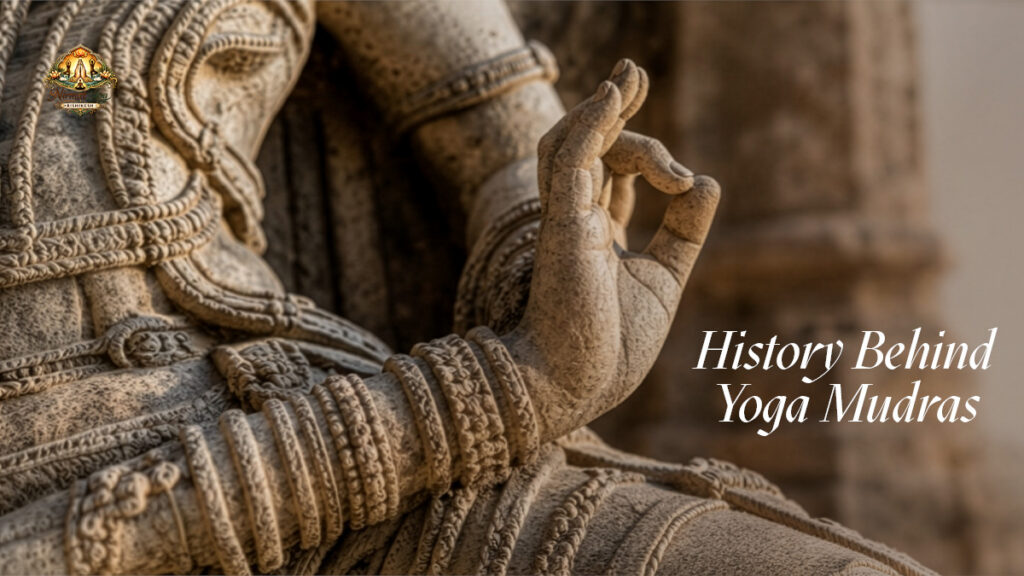
Mudras have been part of Indian spiritual and cultural traditions for centuries. You can find them in yoga, meditation, classical Indian dance, religious artwork, sculptures, and depictions of spiritual teachers. Look closely at traditional paintings or statues, and you’ll often notice that the hands are positioned very deliberately. Within yoga, mudras became connected with practices involving the body, breath, concentration, and meditation.
There are many different mudras described in traditional texts, and not every school of yoga teaches them in exactly the same way. That’s why you may come across slightly different instructions or interpretations for the same mudra. There’s no need to get hung up on that when you’re starting out. Learn the basics, practice comfortably, and understand the tradition you’re learning from.
Some Common Mudras in Yoga
There are dozens of mudras, but you really don’t need to learn all of them. A few are particularly common in yoga and meditation.
Dhyana Mudra
Dhyana Mudra is probably one of the first mudras you’ll notice in traditional images of meditation. To practice it, sit comfortably and rest your hands in your lap. Place one hand on top of the other, with the palms facing upward. The tips of the thumbs gently touch. The word “dhyana” relates to meditation or contemplation, so this mudra is naturally associated with a meditative state. There’s nothing complicated about it. Once your hands are in position, you can simply focus on your breathing and allow your attention to settle. If you’re new to meditation, try Dhyana Mudra for five minutes rather than worrying about sitting for half an hour. Five quiet minutes is a perfectly good place to start.
Anjali Mudra
This is the familiar “hands together” gesture. Bring your palms together in front of your chest, with your fingers pointing upward. Anjali Mudra is commonly used as a gesture of respect, gratitude, greeting, or prayer. It’s also frequently used at the beginning or end of yoga classes. You may have noticed that bringing your hands together naturally makes you pause for a moment. That’s part of what makes this mudra so useful. It can mark a transition – from rushing around to practicing, from movement to stillness, or from the end of a yoga session back into your day.
Gyan Mudra
Gyan Mudra is another very recognizable hand gesture. The tip of the index finger touches the tip of the thumb, while the other three fingers remain relaxed and extended. You’ll often see this mudra used during meditation. Traditionally, Gyan Mudra is associated with knowledge, awareness, and concentration. Many practitioners find it comfortable to use while sitting quietly or practicing breathing exercises. Again, don’t worry about getting your fingers into a perfectly rigid position. The gesture should feel natural and relaxed.
Chin Mudra
Chin Mudra looks quite similar to Gyan Mudra, although the positioning of the hands differs in traditional instructions. It’s commonly used during meditation and pranayama and is associated with awareness and consciousness. If you’re learning mudras from a teacher, you’ll likely notice that small details such as whether the palms face upward or downward can vary according to the tradition. That doesn’t mean one version is necessarily “wrong.” Yoga has been taught through many different lineages, and variations are part of that history.
What Is Yoga Mudrasana?
Here’s where things can get a little confusing. Yoga mudrasana and a yoga mudra aren’t the same thing. A mudra is generally a gesture or symbolic position. Yoga Mudrasana is a specific yoga posture. Yoga Mudrasana is traditionally practiced as a seated forward-folding posture and is considered more demanding than simple hand mudras. So if you’re searching for yoga mudrasana because you’re looking for hand gestures, you may actually be looking for something different. And if you’re interested in practicing the posture itself, it’s better to learn it from an experienced yoga teacher. Like any deeper forward fold, forcing the body into the position isn’t a good idea.
What Are the Benefits of Mudras in Yoga?
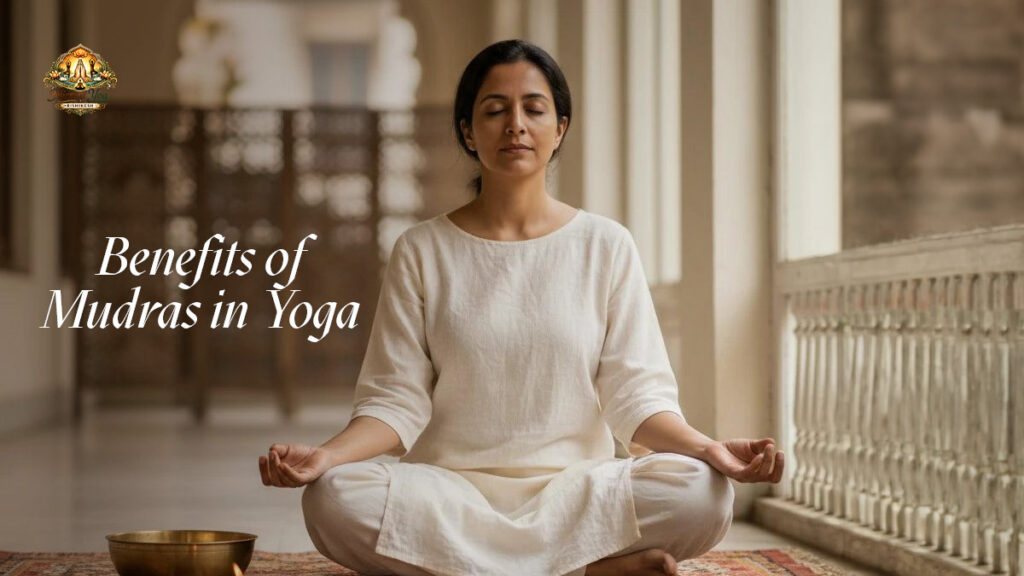
This is where it’s useful to separate traditional yoga philosophy from modern scientific claims. Traditional yoga gives mudras specific energetic meanings and purposes. Modern research on individual mudras, however, is still limited, and not every traditional claim has been scientifically established. That doesn’t make the practice meaningless. A mudra can still be useful as part of meditation, breathing exercises, or a broader yoga routine. Some of the practical benefits people associate with mudras in yoga include:
- Helping create a sense of focus during meditation
- Giving the hands and mind a simple point of awareness
- Encouraging stillness and mindfulness
- Creating a sense of intention before a yoga or meditation session
- Helping make meditation feel more structured
- Connecting physical awareness with breathing and concentration
And there’s something wonderfully simple about them. You don’t need equipment or any large room and don’t even need a yoga mat. You can practice a hand mudra almost anywhere you can sit comfortably.
How to Practice a Yoga Mudra
If you’re completely new to mudras, don’t overthink it. Find somewhere comfortable to sit. Keep your spine naturally upright without making yourself stiff. Relax your shoulders. Let your face soften. Choose one mudra – Dhyana Mudra is a good option if you want to meditate. Place your hands comfortably and close your eyes. Now pay attention to your breathing. You might notice the air moving through your nose or notice the sensation in your fingertips. When your mind wanders, come back. That’s really all there is to it. Start with five minutes. If you enjoy it, gradually make the practice longer. There’s no prize for holding a mudra for an hour.
Do You Have to Believe in Energy to Practice Mudras?
Not at all. Some people practice mudras because they connect deeply with the traditional yogic understanding of prana and subtle energy. Others simply enjoy the concentration and mindfulness that come with the practice. Both approaches can coexist. You don’t have to force yourself to believe something you don’t understand. At the same time, you don’t have to dismiss a traditional practice simply because you can’t explain every aspect of it scientifically. You can explore it. Pay attention to your own experience. And decide what the practice means to you.
A Few Things to Remember
Mudras are generally gentle practices, but “gentle” doesn’t mean you should force your hands into uncomfortable positions. If your fingers, wrists, or joints start hurting, relax the position. People with existing hand or wrist problems may need to modify certain gestures.
If you’re dealing with an injury or health condition, it’s sensible to check with a qualified healthcare professional or experienced yoga instructor before beginning. Also, don’t feel that you need to practice ten different mudras because you saw a list online. Pick one. Learn it properly. Practice it consistently. You may get much more out of that than constantly switching between techniques.
Bringing Mudras Into Your Everyday Routine
One of the easiest ways to make mudras part of your life is to connect them with something you already do. For example, you could practice Dhyana Mudra during your morning meditation. Use Anjali Mudra before beginning your yoga practice. Spend five quiet minutes with Gyan Mudra after work when you want to mentally switch off. The point isn’t to add another complicated task to your schedule. It’s to create small moments when you deliberately stop and pay attention. That may be the most useful way to think about yoga mudras. They’re not necessarily something separate from yoga. They can become part of the pause within yoga.
Final Thoughts
Mudras don’t ask for much. A few minutes. A comfortable seat. Your hands. Your attention. And perhaps that’s part of their appeal. We spend so much time moving from one thing to another that deliberately sitting still can feel surprisingly unfamiliar. A simple yoga mudra gives you a reason to pause and notice what’s happening right now. That’s already something. Whether you explore Dhyana Mudra, Anjali Mudra, Gyan Mudra, or another traditional practice, approach it with curiosity rather than expectation. You don’t need to chase a dramatic experience. Sit down. Place your hands. Breathe. Pay attention. Sometimes, that’s where the practice really begins.
Frequently Asked Questions
A mudra in yoga is a traditional gesture or position used during practices such as meditation, pranayama, and yoga. While mudras can involve different parts of the body, hand mudras are the most commonly recognized. They are traditionally associated with concentration, awareness, meditation, and the direction of prana.
Mudras can provide a simple physical focus during meditation and may help practitioners develop greater awareness and concentration. Traditionally, different mudras are associated with different qualities and energetic effects. However, many specific health claims surrounding individual mudras have not been conclusively established by modern scientific research.
Dhyana Mudra is traditionally associated with meditation and contemplation. The hands rest in the lap, one on top of the other, with the thumbs gently touching. It can be used during seated meditation to encourage a calm and focused state.
A yoga mudra is generally a gesture or symbolic position, often involving the hands. Yoga Mudrasana is a specific seated yoga posture involving a forward fold. Although the names sound similar, they refer to two different practices.
There isn’t one fixed duration that applies to every yoga mudra. If you’re a beginner, five to ten minutes is a reasonable starting point during meditation. As you become comfortable, you can gradually increase the duration. The position should remain relaxed and pain-free.