Finding a few moments of calm in this fast-paced world can be a challenge. With work, responsibilities, and all that screen time, our minds don’t get much of a chance to slow down. The good news is that there are simple, effective breathing techniques in yoga that can help to bring balance back. One of the most powerful is nadi shodhana pranayama (alternate nostril breathing).
It is an ancient breathing technique known to calm the nervous system, improve focus, and promote emotional balance, often practiced before meditation or at the end of a yoga session. Nadi Shodhana is a gentle practice, and unlike vigorous breathing exercises, it is suitable for beginners and experienced yoga practitioners.
If you are curious to know how it works, nadi shodhana pranayama benefits, or the correct nadi shodhana pranayama steps, this guide has you covered.
What Is Nadi Shodhana Pranayama?
It is a traditional yogic breathing technique that involves breathing in and out through alternate nostrils in a slow and controlled rhythm thats why Nadi Shodhana Pranayama is also called as “alternate nostril breathing”. Nadi in Sanskrit means “energy channel,” and Shodhana means “purification” or “cleansing.” It is believed this exercise clears the subtle energy channels of the body so that prana or life energy can flow more freely.
In today’s language it is often called alternate nostril breathing because you switch between left and right nostrils with each in-breath and out-breath.
In many yoga traditions, this practice is said to balance the two primary energy channels of the body, Ida and Pingala, which are connected to calmness and activity. A balanced state of these energies leads to a more stable mind and easier and more effective meditation.
Why Is Nadi Shodhana Pranayama So Popular?
Many breathing techniques energize the body, but Nadi Shodhana is about creating balance. It does not demand the breath but encourages smooth, quiet, rhythmic breathing.
It is part of the daily routine of many practitioners because it:
- Improves mental clarity
- Encourages relaxation
- Helps to reduce day-to-day stress
- Encourages healthy breathing patterns
- Readies the mind for meditation
It is one of those practices that do not need any special equipment, only a quiet place and a few minutes’ uninterrupted time.
Nadi Shodhana Pranayama Steps
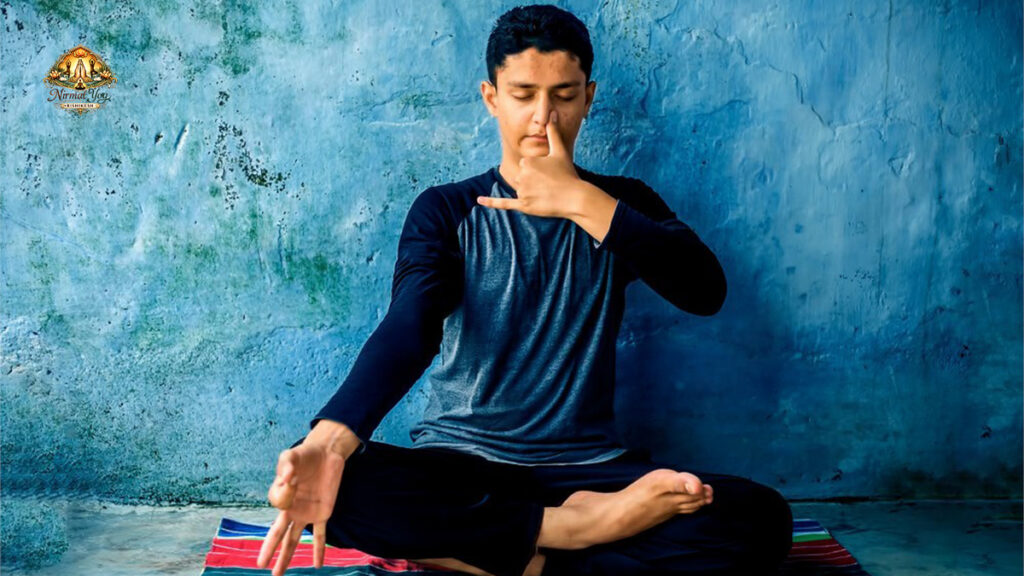
Learning the correct nadi shodhana pranayama steps is important for experiencing the full benefits of the practice. Beginners should focus on slow, even breathing rather than trying to hold the breath for long periods.
Step 1: Sit Comfortably
Sit in a comfortable cross-legged position on the floor or on a chair with your spine upright. Keep your shoulders relaxed and gently close your eyes.
Rest your left hand on your left knee in Chin Mudra or simply keep it relaxed.
Step 2: Form the Hand Position
With your right hand, use Vishnu Mudra or Nasagra Mudra.
- Fold or gently rest your index and middle fingers between the eyebrows.
- Use your thumb to close the right nostril.
- Use your ring finger to close the left nostril.
This hand position allows you to alternate your breathing smoothly.
Step 3: Inhale Through the Left Nostril
Close your right nostril with your thumb.
Slowly inhale through the left nostril while mentally counting to three, four, or five – whatever feels comfortable.
Focus on breathing deeply using your diaphragm instead of taking shallow chest breaths.
Step 4: Exhale Through the Right Nostril
Close the left nostril using your ring finger.
Release your thumb from the right nostril and exhale slowly using the same count as your inhalation.
Keeping the inhale and exhale equal helps create a steady breathing rhythm.
Step 5: Inhale Through the Right Nostril
Keeping the left nostril closed, inhale through the right nostril using the same count.
Step 6: Exhale Through the Left Nostril
Close the right nostril and slowly exhale through the left.
This completes one full round of Nadi Shodhana.
Beginners can comfortably practice five to ten rounds each day.
Gradually Increasing the Breath Count
A key principle of nadi shodhan pranayama is to build up gradually.
Begin with equal inhalation and exhalation, for example:
- Breathe in for 4 counts
- Breathe out for 4 counts
When you get used to it, you can slowly increase the count as your breathing evens out.
Many practitioners eventually work toward a 12-count inhalation and 12-count exhalation. The important thing is not to rush. If the breath feels strained, simply reduce the count.
After mastering equal breathing, experienced practitioners often adopt a 1:2 ratio, where the exhalation becomes twice as long as the inhalation. For instance:
- Breathe in for 5 counts
- Exhale for 10 counts
The longer exhalation promotes a deeper sense of relaxation and calms the heart and nervous system.
Advanced Practice: Breath Retention

As practitioners gain experience, they may introduce antar kumbhaka, or internal breath retention.
In this variation:
- Inhale through one nostril
- Hold your breath comfortably with both nostrils closed
- Slowly exhale through the other nostril
With regular practice under the guidance of a qualified yoga teacher, the breathing ratio can gradually move from:
- 1:1:1
- 1:1:2
- 1:2:2
With time, advanced practitioners learn to combine internal and external breath retention techniques.
These practices should only be attempted after mastering the basic technique and should never involve straining or forcing the breath.
Nadi Shodhana Pranayama Benefits
It’s no wonder that alternate nostril breathing is becoming more popular. There are many benefits of nadi shodhana pranayama that help in physical and mental health.
1. Helps Reduce Stress and Anxiety
Slow rhythmic breathing relaxes naturally. Many practitioners find that consistent practice helps them feel calmer in stressful situations.
2. Supports the Nervous System
Nadi Shodhana has a calming effect on the nervous system and can help to relieve mental fatigue after a busy day.
3. Improves Oxygen Supply
Controlling your breathing can help your lungs work more efficiently. This means that the oxygen can get to the tissues in your body and help to remove carbon dioxide.
4. Enhances Mental Clarity
A calmer mind is often a better concentration, enhanced focus, and increased productiveness.
5. Balances Energy
According to yogic philosophy, this practice balances the Ida and Pingala Nadis and makes the energy flow more freely throughout the body.
6. Prepares the Mind for Meditation
Many yoga teachers suggest practicing Nadi Shodhana right before meditation, as it helps to naturally calm the mind.
7. Promotes Smooth, Mindful Breathing
With regular practice, you’ll become more aware of your breathing patterns, which will encourage you to breathe more slowly and more efficiently throughout the day.
8. Encourages Emotional Balance
Because the practice emphasizes calm, rhythmic breathing, many people report feeling more emotionally balanced after regular sessions.
Best Time to Practice
Nadi shodhana pranayama also has the benefit of being able to fit into most people’s everyday schedule.
Good times to practice are:
- Early morning
- Before meditation
- Yoga asanas done
- On a stressful day at work
- Before sleep
Don’t work out immediately after a large meal. The general rule of thumb is to wait at least one to two hours after you have eaten.
Adding just 10-15 minutes of practice or 5-10 rounds a day can be a meaningful addition to your wellness routine.
Tips for Beginners
If this is your first time practicing, just remember these simple guidelines:
- Sit comfortably and straighten your spine.
- Keep your breathing silent and gentle.
- Never force the breath.
- Avoid breathing through the mouth.
- Don’t count. Sense the rhythm.
- If one nostril feels blocked, don’t force the airflow.
- Increase the breath count gradually over weeks or months.
Remember, yoga emphasizes consistency – not perfection.
Precautions
Nadi Shodhana is generally safe, but there are a couple of things to be aware of.
If you feel dizzy, uncomfortable, or short of breath, breathe normally again and rest.
Breath retention at an advanced level should be performed only under the supervision of an experienced yoga teacher.
If you have a respiratory condition, blood pressure issues that are not well controlled, or other medical concerns, check with your healthcare provider before trying more advanced pranayama techniques.
Final Thoughts
We do it every moment of our lives, but few of us ever really pay attention to our breath. Nadi shodhana pranayama reminds us that the quality of our breath can influence the quality of our thoughts, emotions and overall well-being.
This ancient yogic breath practice is an easy habit to incorporate into your daily routine if you want to reduce stress, increase focus, or create a peaceful entryway into meditation. Begin with a few rounds a day, breathing comfortably, and let the practice unfold naturally as you go.
Frequently Asked Questions
Nadi shodhana pranayama is a yogic breathing technique in which you breathe alternately through the left and right nostrils. This is done to bring peace to the mind, balance energy, and increase an awareness of the breath.
Some of the most common benefits reported for the Nadi Shodhana pranayama technique are reduced stress, increased concentration, improved oxygenation, increased relaxation, balanced energy, and readiness for meditation.
The basic nadi shodhana pranayama steps are as follows: Sit comfortably. Use Vishnu Mudra. Inhale one nostril. Exhale the other nostril. Repeat the sequence for 5-10 rounds, breathing slow and even.
Yes, you can. If you are a beginner, you can practice nadi shodhan pranayama for 5 to 15 minutes every day without any harm if you breathe gently and do not strain or hold your breath longer than is comfortable.
Most yoga teachers will tell you to do nadi shodhana pranayama before your meditation because it calms the nervous system and settles the mind, which helps you to focus better when you meditate.