
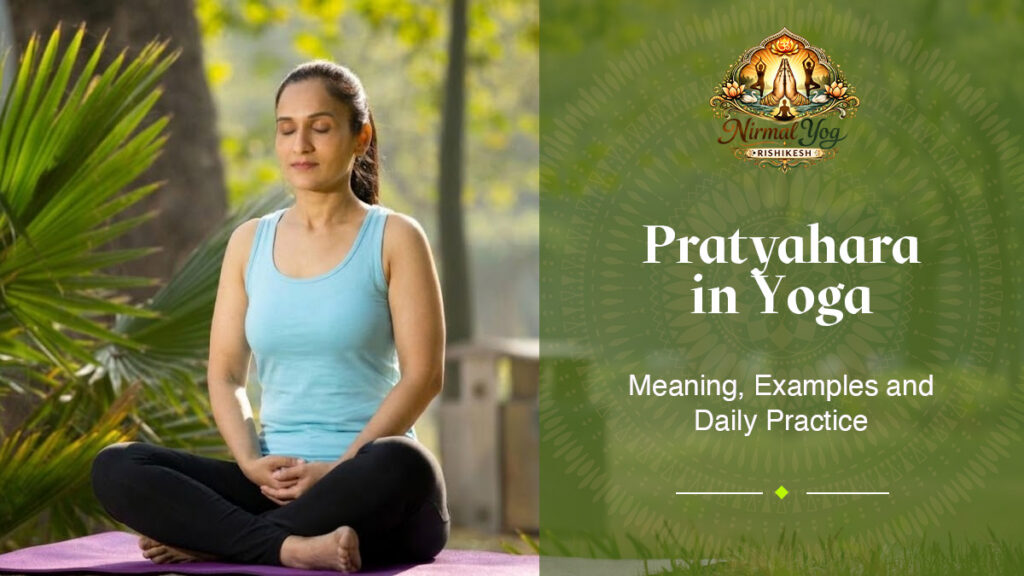
Most of us know the feeling. You sit for meditation, close your eyes and within half a minute the mind has already left the room. A scooter passes outside. You remember an email you forgot to reply to. Your shoulder feels tight. Somewhere between all of this the breath you were supposed to watch has disappeared.
Yoga has a name for the skill that helps here: pratyahara. People often translate it as withdrawal of the senses, which sounds a little severe. It makes you picture someone sitting in a room trying hard not to hear anything. That is not really what the practice is about.
Pratyahara in yoga is closer to learning where your attention goes. Sounds still reach you. Thoughts still come. The body still feels things. The difference is that you stop following every one of them. You notice the pull. You come back.
What Pratyahara Actually Means
The word comes from Sanskrit. ‘Prati’ carries the sense of “back” or “away ” while ‘ahara’ refers to the intake of what we take in through the senses. So pratyahara points to drawing from the constant flow of sensory input.
Patanjali places pratyahara as the limb in his eight-limbed path of yoga. It comes after the work we do with conduct, habits, the body and breath. It comes before concentration, meditation and the deeper states of absorption.
That placement tells you something. Yoga does not jump straight from a posture to meditation. There is a stage in between. The body may be still and the breath may be steady. The mind can still be running in ten directions. Pratyahara deals with that gap.
A way to see it: imagine reading a book in a busy café. Someone laughs nearby. A spoon clinks against a cup. Your eyes stay on the page. Your mind has already joined the conversation at the next table. Pratyahara is not about not hearing those sounds. It is about hearing them and staying with the book.
Pratyahara Meaning in Hindi
In Hindi pratyahara is written as प्रत्याहार. It is often explained as इंद्रिय-निग्रह, which means restraint of the senses.
The phrase can sound strict. Many people hear “control the senses” and assume yoga wants them to fight their impulses. That is not the spirit of the practice. The senses are not the enemy. They are how we experience food, music, sunlight, other people and the world around us.
The problem starts when the senses constantly pull the mind outward. The eyes want to look at something. The ears catch every sound. The tongue wants another taste. The mind reacts before we even realise what happened. Pratyahara introduces a gap in that cycle.
Why Pratyahara Matters for Anyone Who Meditates
Anyone who has tried to meditate knows that the first few minutes can be humbling. You decide to watch the breath. Then a thought arrives. You come back. Another thought arrives. You come back again. After a while it feels like meditation and more like herding cats.
This is where pratyahara yoga helps. It does not remove distraction. Nothing removes distraction completely. It changes how much power distraction has over you.
Say you are lying in savasana after a yoga class. A door shuts loudly in the corridor. One person opens their eyes, feels annoyed and starts mentally complaining about the noise. Another person hears the door, notices the irritation and returns to the breath. Both heard the sound. Only one of them stayed present.
That second response is pratyahara in action. It is not dramatic. Nobody would notice it from the outside. Internally it is a completely different experience.
Pratyahara Is Not Blocking the World
There is an idea that pratyahara means avoiding noise, people, phones or difficult situations. Some silence helps when you are learning, no doubt about that. A quiet room makes it easier to notice what the mind is doing.
If you can only stay calm in perfect silence your attention still depends on the room being a certain way. Real practice begins when conditions are less than ideal.
The turtle image is often used for this limb of yoga. The turtle pulls its limbs inward. It is an image but it can mislead people into thinking the goal is to hide. The goal is not hiding. It is stopping the outward leak of attention.
A parent cannot switch off household noise. Someone working from home cannot always escape traffic or neighbours. A student sharing a room may not have privacy. Pratyahara yoga matters precisely because life is rarely quiet.
Everyday Examples of Pratyahara
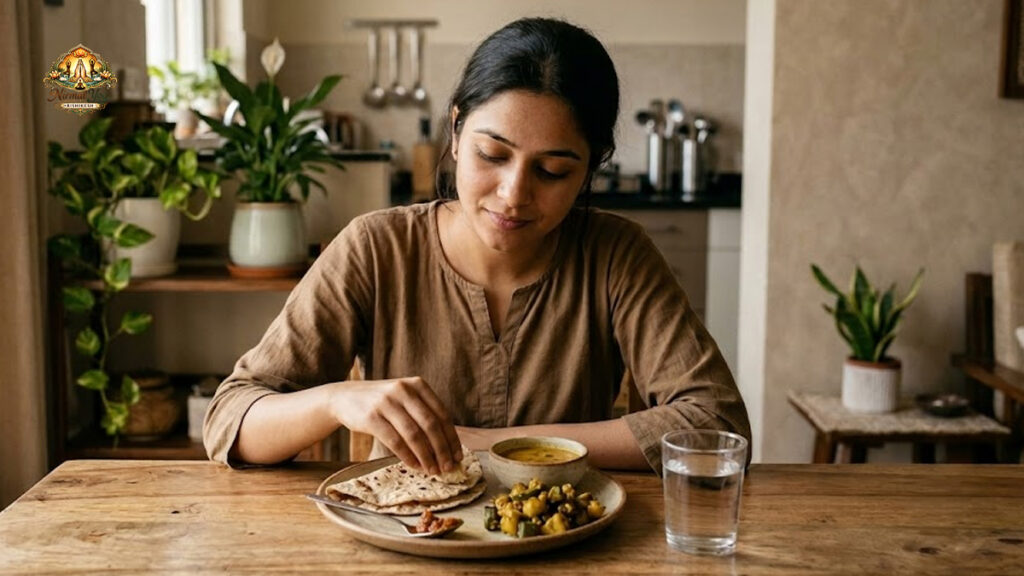
You do not need a retreat or hours of time to practice this. Some of the useful moments happen in ordinary daily life.
- Eat one meal without a screen. Put the phone in another room. Notice the taste, the texture, the smell. Most people are surprised by how unfamiliar their own food feels when they actually pay attention to it.
- Listen to sounds for five minutes. Sit comfortably. Let sounds come and go. Traffic, a fan voices in another room. You can name them quietly. Do not follow them into a story.
- Walk without headphones. Feel your feet on the ground. Notice what you see. Resist the urge to turn the walk into planning or replaying conversations.
- Keep the phone away for half an hour. Notice the urge to check it. Do not fight the urge. Judge it. Just watch it rise and pass.
- Stay still in savasana. After a yoga session give yourself a few minutes. Let sensations come. Resist the habit of adjusting or moving.
None of these practices require equipment. What they require is a willingness to be with your experience for a few minutes without escaping it.
A Short Daily Practice You Can Try
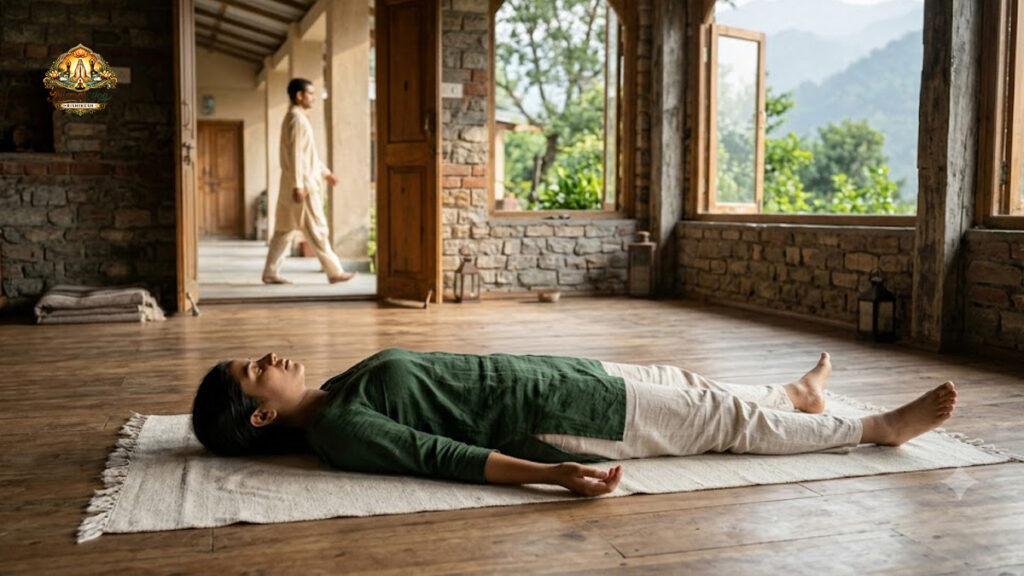
If you want something structured, start with ten minutes. Morning works well for people but any consistent time is better than a perfect time.
- Lie down comfortably. Let the body be supported. Close your eyes if that feels natural.
- Take five breaths. Let the exhale be a little longer than the inhale. Do not force anything.
- Notice the senses one at a time. What do you hear? What do you feel against your skin? Is there a smell in the room? Do not change any of it. Just observe.
- Move attention to the breath. Stay with the rhythm for a few minutes.
- When the mind wanders, come back. This is the part. Coming back is not failure. Coming back is the practice.
- End with one minute of stillness. Let go of effort. Just remain.
In the beginning you may return to the breath twenty or thirty times in ten minutes. That is normal. Each return is a repetition and repetition is how attention gets trained.
Mistakes People Make With Pratyahara
Mistakes show up again and again.
- Trying to force quiet. Pushing thoughts away usually gives them energy. Let them arise. Then return to the breath.
- Treating it as escape. Pratyahara is not about avoiding responsibilities or people. It is about not losing yourself in every distraction.
- Expecting results. Attention is a habit. A few weeks of daily practice will do more than one long session once a month.
- Using it to avoid feelings. If sadness, anxiety or anger comes up do not use sense withdrawal to push it down. Observe it with some steadiness. If it feels heavy talk to someone
- Making it about phones. Screens are a target but pratyahara also concerns how you respond to food, noise, discomfort and desire.
Pratyahara in a Distracted World
It is hard to talk about attention today without talking about phones. Notifications arrive all day. Videos are designed to be short. Feeds never run out. The mind gets trained to expect something every few seconds.
Pratyahara does not ask you to throw away your phone. It asks a practical question: can you decide when to engage and when to stop?
Someone who can pause before opening a message or sit with a moment of boredom without reaching for a screen has a kind of freedom that’s easy to underestimate. It is not dramatic freedom, It is peaceful freedom, It changes how the day feels.
How Pratyahara Leads Into Meditation
Meditation does not start when the mind goes silent. That never happens, at least not in the beginning. Meditation starts when you can stay with one thing: a breath, a sound, a sensation even while the mind keeps producing thoughts.
Pratyahara makes that possible. When attention is scattered concentration stops feeling like a fight. You are not forcing the mind inward. It begins to settle on its own.
The changes can be small at first. Maybe you notice a thought before it takes over or Maybe you sit for two minutes without reaching for your phone. Maybe savasana feels like waiting for the class to end and more like actual rest. These are not things. They are the beginning of a mind.
A Closing Thought
Pratyahara gets misunderstood because of its translation. “Withdrawal of the senses” sounds like leaving life behind. It is really the opposite. It is a way of being more present in life, without being pulled by it.
You do not need to escape. You only need to notice when attention drifts and bring it back. Do that enough gently enough and something shifts. The mind becomes a place you can rest in not a place you are trying to escape from.
Frequently Asked Questions
Pratyahara in yoga is the limb of Patanjali’s eight-limbed path. It means gathering the senses inward external stimuli to stop controlling attention.
The usual pratyahara meaning is withdrawal of the senses. In practice it means redirecting awareness from objects toward inner experience.
Pratyahara meaning in Hindi is प्रत्याहार, explained as इंद्रिय-निग्रह meaning restraint of the senses.
No. Pratyahara prepares the mind for meditation. Meditation then works with concentration and awareness.
Yes. Start small. Breath awareness, eating, silent walking or listening to sounds without reacting are all good entry points.