Have you ever asked yourself why certain opportunities arise at certain times in your life or why certain challenges keep coming up? For centuries, people have been using Vedic astrology, KP astrology, and palm reading to get a better understanding of their personality, life purpose, and major life events.
These old systems are often mistaken for ways of predicting the future. In fact, they are potent tools for self-awareness. They don’t tell you what to do; they help you to understand your strengths, to see the patterns that keep repeating themselves, and to make better-informed decisions.
Each discipline has its own unique approach, but they complement each other beautifully. Vedic astrology gives you the blueprint of your life through your birth chart; KP astrology enhances predictions with amazing accuracy; and life palmistry reveals your changing personality and experiences through the lines and shapes of your hands.
Together they give you a complete picture of your life’s journey.
What is Vedic Astrology?
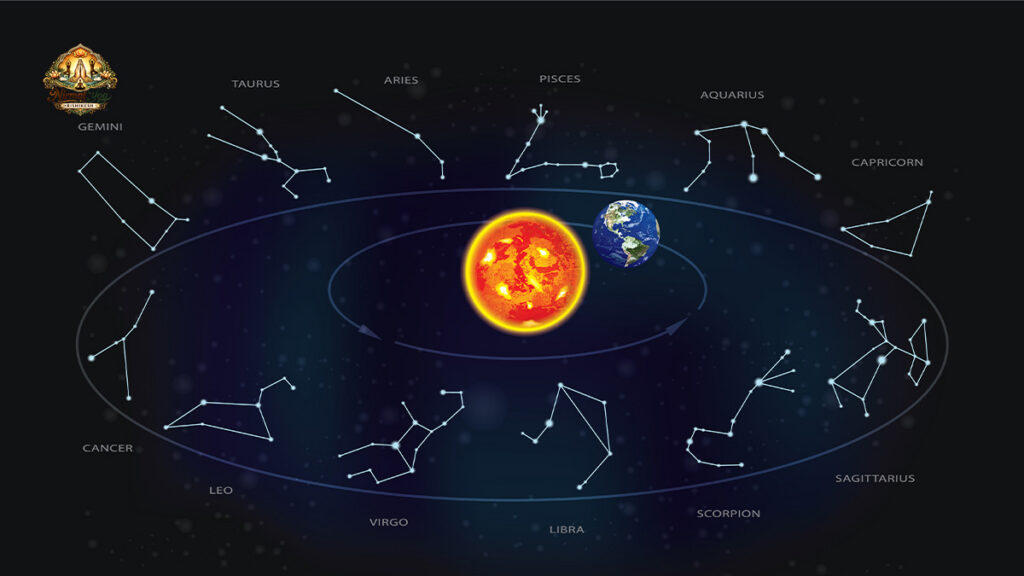
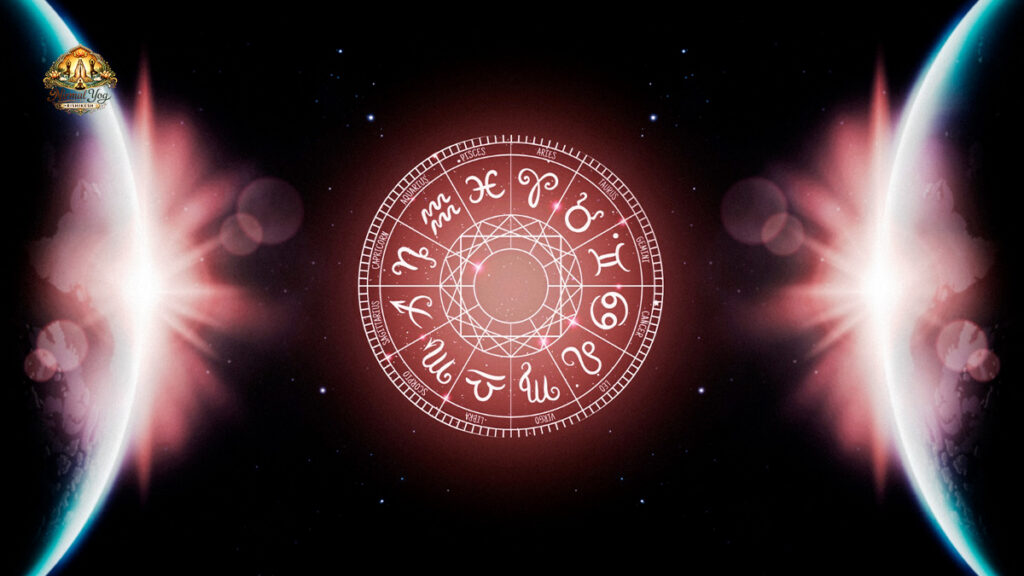
Vedic astrology is one of the oldest systems of astrology in the world. Also known as Jyotish Shastra, it is based on ancient Indian wisdom and studies the position of planets and stars at the exact time of birth to understand one’s personality, karmic tendencies, and life path.
Vedic astrology is not like the popular columns you find in your newspaper. It involves detailed calculations based on the position of planets, zodiac signs, houses, and lunar constellations called Nakshatras.
A Vedic astrologer looks at several important factors, such as:
- Ascendant (Lagna)
- Position of the Planets
- Twelve Houses of Astrology
- Planetary periods (Dasha)
- Nakshatras
- Planetary transits
These ingredients combine to form a detailed birth chart that acts like a map of life’s opportunities, challenges, and lessons.
The Importance of Yogas in Astrology
One of the key characteristics of yogas in astrology is the confluence of planets that produces specific effects in the birth chart.
In Sanskrit, the word “Yoga” means to unite or to combine. In astrology, Yogas are formed when planets are in certain houses or when they have some special relationship with each other.
Combinations like these may suggest the following:
- Leadership skills
- Financial health
- Academic excellence
- Creative ability
- Professional achievement
- Spiritual inclination
Yogas in astrology are not promises of what will happen but indicators of what can happen based on the individual’s efforts, life situation, and timing of planets.
These yogas help people to see opportunities and areas for conscious growth.
Understanding KP Astrology
KP Astrology (Krishnamurti Paddhati) is one of the popular modern astrological systems and is very systematic and precise.
Created by Professor K.S. Krishnamurti, the method is based on traditional Vedic astrology but has unique techniques for event prediction.
KP astrology is not only about general planetary interpretation, but also:
- Nakshatras (star signs)
- Sub-lords
- Accurate house divisions
- Planetary significators
- Planets ruling
These refinements enable practitioners to respond with greater clarity to very specific questions regarding career, education, marriage, travel, or business.
Why KP Astrology is Known for Precision
Nakshatras and sub-lords, together with the study of planetary periods (Dasha and Bhukti), can narrow down the favorable periods for important decisions.
KP astrology questions that people often ask are the following:
- When is it time to change careers?
- Is now a good time to be in higher education?
- When will marriage opportunities arise?
- Is it worth moving?
- When is the best time to start a business?
KP astrology is not about making vague predictions; it is about giving structured, logical, and evidence-based interpretations based on astrological principles.
What is Palm Reading?
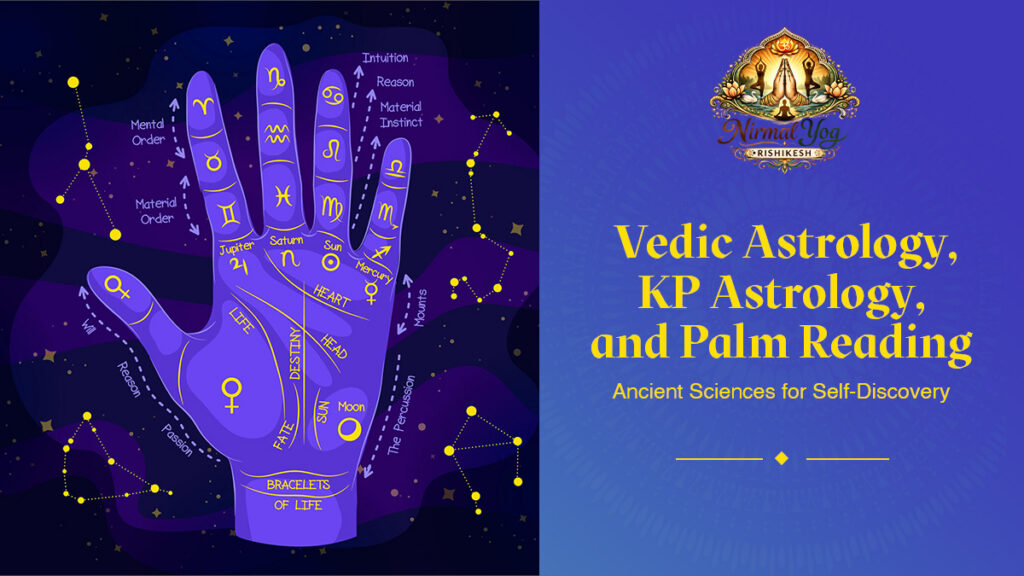
Palmistry (also called palm reading or chiromancy) is the ancient art of reading the lines, mounts, shapes, and general structure of the hands to gain insight into personality and life experiences.
Palm reading is not based on your date of birth like astrology; it focuses only on observing your hands.
Our hands change subtly through life, and many practitioners believe they show personal growth, choices, and changing life circumstances.
The following features are critical in palmistry:
- Hand form
- Main lines
- Small lines
- Finger size
- Mounts between the fingers
- The texture and pliability of the skin
Each piece contributes to an image of the individual and of what they might be capable of.
Understanding Life Palmistry
Life palmistry is one of the most talked-about aspects of palmistry. This branch looks at the major lines concerning vitality, emotions, intellect, and life direction.
The Life Line is not what you think. It does not tell you how long you will live.
It rather reflects:
- Physical energy
- Energy states
- Big life changes
- Resilience
- Major milestones
Palmists also study:
Heart Line
Related to emotion, relationships, and compassion.
Head Line
Denotes the style of thinking, decision-making, and intellectual skills.
Fate Line
It shows the direction of the career, ambitions, and external influences.
These lines provide useful insights into personality development and life experiences.
Palm Reading as a Tool for Self-Awareness
Today, palm reading is less about fortune telling and more about self-reflection.
Watching the hands change over time can help promote mindfulness and self-improvement.
Palmistry can help people in the following ways:
- Recognize emotional tendencies
- Recognize your own strengths
- Recognize repeating life patterns
- Take major decisions
- Build greater self-awareness
Many palmists view palmistry as a dynamic system rather than a fixed one, as the hands change over a lifetime.
How Vedic Astrology, KP Astrology, and Palm Reading Work Together
Each system may be studied alone, but we often develop a greater awareness of life by coupling them together.
Vedic Astrology
Gives the basic life pattern through the birth chart.
KP Astrology
It provides accurate timing for important events through Nakshatras and sub-lords.
Palm Reading
Hands are a mirror of present personality traits, changing experiences, and personal growth.
Together, these three disciplines will allow practitioners to:
- Cross-validate interpretations
- Broaden your perspective
- Learn both static trends and changing conditions
- Make smarter, more confident decisions
They don’t replace one another, but rather supplement one another by offering different perspectives on the same life journey.
Why These Ancient Sciences Remain Relevant Today
Modern life is uncertain, ever-changing, and full of difficult choices.
Vedic astrology, KP astrology, life palmistry, and other ancient systems are still interesting because they make people think things through rather than making snap decisions.
Whether you are considering a change of career or relationships or in need of spiritual enlightenment, these disciplines provide structured ways to make sense of the patterns of life.
Their endurance is not because of certainty, but because of perspective.
Final Thoughts
Vedic astrology, KP astrology, and palm reading go much further than prediction in the wisdom they hold. These ancient sciences promote greater self-awareness, a more considered decision-making process, and increased awareness of the patterns of life.
Vedic astrology provides the larger karmic map.
KP astrology fine-tunes that blueprint with exceptional precision and timing.
Life palmistry tells the story of a person’s dynamic growth as reflected in their hands.
Studied together, they create a multi-dimensional approach to self-discovery, one that helps individuals better understand their strengths, navigate challenges, and align their actions with greater clarity and purpose.
Ultimately, these traditions serve as a reminder that while circumstances may affect our lives, awareness, reflection, and conscious choices are equally significant in shaping our journey.
Frequently Asked Questions
Vedic astrology has a comprehensive system of birth chart interpretation based on planets, houses, dashas, and nakshatras. KP Astrology makes use of sub-lords and exact house divisions to develop these principles for timing specific events better.
Yes. Palmistry and astrology are separate arts, but many practitioners use both. Astrology provides information from the birth chart. Palmistry demonstrates your personal growth and changing life experiences through your hands.
In astrology, yogas are specific planetary combinations in a person’s birth chart, indicating certain strengths, talents, opportunities, or challenges. They help astrologers understand a person’s potential in different aspects of life.
Life palmistry is the reading of the major lines of the hand—especially the life line—to understand vitality, personal growth, major life transitions, and overall life patterns, not to predict life span.
KP astrology is very renowned for its accurate prediction of the timing of events with the help of planetary periods, Nakshatras, and sub-lords. No astrological system can give exact results but KP astrology is appreciated for being able to give more specific timing than many traditional systems.
Vedic astrology is a particularly useful starting point for many beginners to learn about planetary influences and birth charts. Learning Palm Reading along with astrology gives you a practical, observational viewpoint; KP astrology is often explored after you have a foundation in traditional astrology.