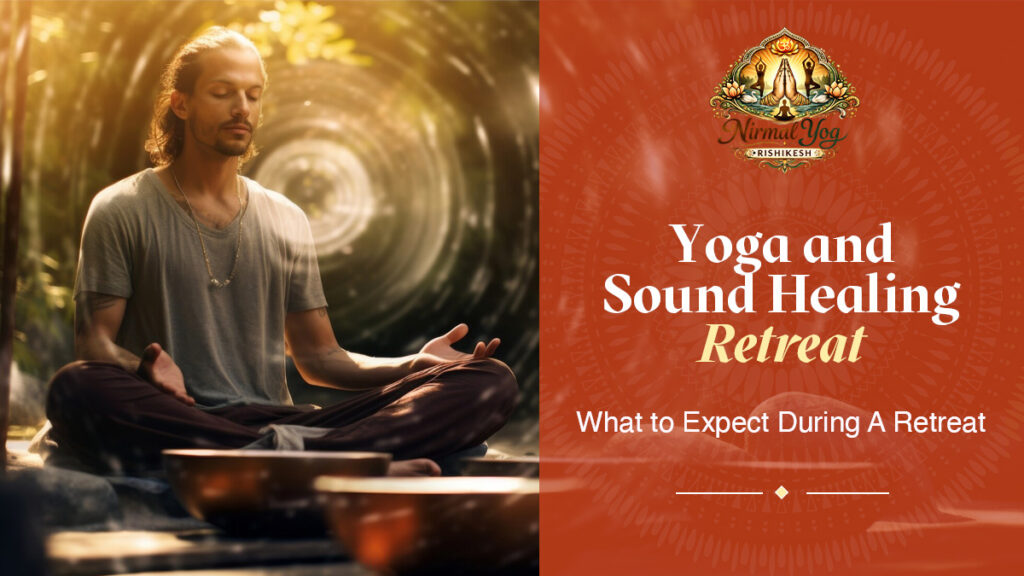
You arrive with a bag, a busy mind and perhaps a quiet hope that a few days away will help you feel like yourself again. A yoga and sound healing retreat offers that kind of pause but not in the vague mysterious way retreat brochures sometimes suggest.
Most retreats combine movement, breath, meditation, rest, nourishing food and immersive sound sessions. The experience can be deeply relaxing, emotionally revealing and physically tiring in ways. Knowing what actually happens helps you arrive with expectations rather than pressure to have a “life‑changing” moment.
At a well‑designed yoga retreat in Rishikesh the setting itself becomes part of the practice: mornings, mountain air, the Ganga nearby and fewer demands competing for your attention.
What a Yoga and Sound Healing Retreat Actually Includes
A sound healing retreat is not simply a holiday with occasional chanting. It is usually an immersion where yoga, meditation and sound‑based relaxation support one another.
You can expect some combination of:
- Daily yoga sessions, Hatha, Yin or gentle Vinyasa with time for alignment, breath awareness and rest.
- Pranayama or guided breathing practices to settle the system before meditation or movement.
- Meditation and Yoga Nidra, which guide attention inward and encourage rest.
- Sound healing sessions, commonly using singing bowls, crystal bowls, gongs, chimes or voice.
- Simple vegetarian meals, often sattvic in style designed to support lightness and digestion.
- Time, which is more important than it sounds; integration needs space.
- Nature, cultural experiences, such as riverside walks, kirtan, temple visits or Ganga aarti depending on the retreat.
The balance varies. A three‑day retreat may focus on rest and introduction while a seven‑ or ten‑day programme can go deeper into philosophy, breathwork and personal reflection.
Your First Day: Slowing Down Before the Practice Begins
The first day is usually softer than people expect. After travel check‑in and an opening circle many retreats begin with an intention‑setting session rather than an intense yoga class.
This matters because most guests do not arrive relaxed. They arrive carrying work, sleep debt, digital overload and the mental habit of planning the next task. The first evening is often about helping the body recognise that it no longer needs to operate in that mode.
You may be asked to:
- Switch your phone to silent or limit screen use.
- Share your intention for the retreat if you feel comfortable.
- Join a Yin yoga, meditation or opening ceremony.
- Eat a simple dinner.
- Rest earlier than usual.
Do not worry if your first meditation feels restless. That is normal. The purpose of the opening day is not to force calm; it is to create the conditions where calm becomes possible.
A Typical Daily Rhythm
Retreat schedules differ. Most follow a rhythm that supports the body’s natural energy cycles: movement and breath in the morning, reflection and nourishment during the day and restorative practices in the evening.
| TIME OF DAY | WHAT YOU MAY EXPERIENCE | WHY IT HELPS |
| Early morning | Herbal tea, pranayama, Hatha or Vinyasa yoga | Movement and conscious breathing help wake the body without overstimulating it. |
| Late morning | Breakfast, rest, nature walk or self-study | Space between sessions prevents the retreat from becoming another schedule. |
| Afternoon | Sound healing, Yin yoga, workshop or meditation | Softer practices suit the body’s afternoon dip and support release. |
| Evening | Kirtan, Yoga Nidra, reflection or dinner | Gentle evening practices prepare the mind for sleep rather than stimulation. |
Many Rishikesh retreats begin around sunrise include two yoga sessions and place sound healing in the afternoon or evening.
What Happens During a Sound Healing Session?
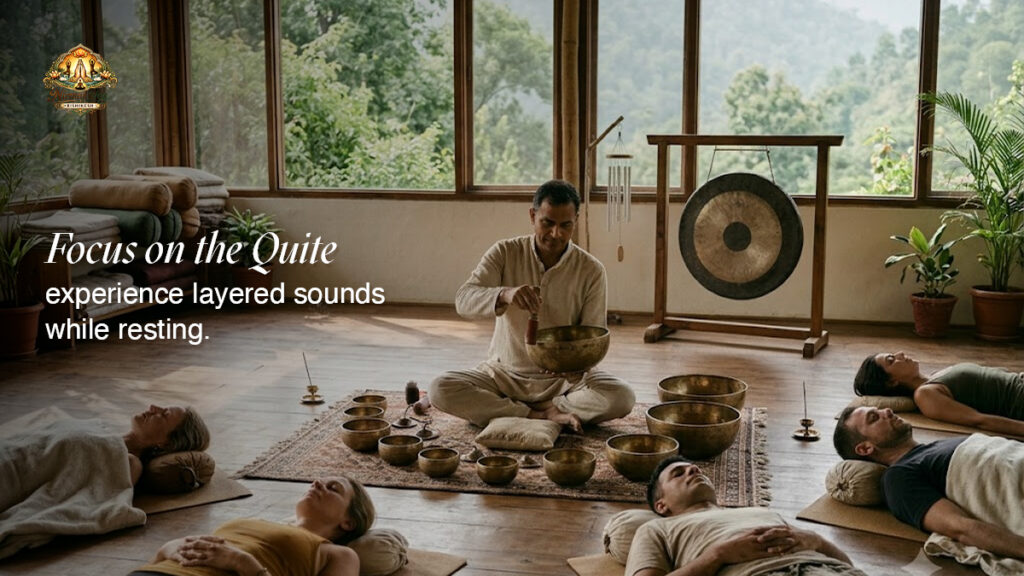
A sound bath can feel unfamiliar at first. You usually lie down with a blanket and cushion, close your eyes and simply listen as the facilitator plays instruments around the room.
There is no posture to hold and no technique to get right. Your only job is to receive the experience.
The sounds are layered: a bowl starts with a tone then a gong swells softly followed by chimes or vocal tones. Some people fall asleep. Others stay alert. Notice thoughts, body sensations or emotions moving through. Both responses are valid.
People often describe sound healing as relaxing, grounding or emotionally clear. These are experiences, not guaranteed medical outcomes. The best way to approach a session is with curiosity: notice what you feel during the session and after, without judging whether it was “deep enough.”
Why Sound Works Well With Yoga
Yoga asks you to become aware of the body through movement and breath. Sound healing asks you to become aware through listening and stillness. Together they create a contrast. A morning Hatha class may reveal tightness in the hips or shoulders; an afternoon sound bath gives the system time to settle without needing to “fix” anything. This pairing is why many retreats place practice earlier in the day and receptive practices later.
The Emotional Part Nobody Warns You About
A retreat can bring up more than muscles. When the usual distractions disappear-work notifications, social plans, constant entertainment ;emotions that were pushed aside can surface. This does not mean something is wrong. It often means the mind finally has enough to process what it has been carrying.
- Unusually tired during the first two days.
- Emotional during meditation chanting or sound healing.
- Irritated by silence, group activities or the absence of your phone.
- Surprisingly clear about a decision or relationship.
- Lighter,calmer or more rested by the final day.
A good facilitator will not pressure you to share or interpret every feeling. If a retreat promises guaranteed breakthroughs treat that as a warning sign rather than a selling point. Emotional release can happen. It should never be manufactured.
Food, Sleep and Physical Sensations
Yoga and sound healing retreats serve vegetarian, often sattvic meals: cooked vegetables, grains, lentils, soups, fruit, herbal teas and limited processed food. The intention is not deprivation; it is to eat in a way that supports clarity and comfortable digestion.
Physically you may experience:
- Muscle soreness if you are new to daily yoga.
- Changes in sleep especially if you normally sleep late.
- Hunger at times as meal timing changes.
- Deep tiredness once your body realises it can finally rest.
Do not compete with participants. If your body asks for rest during a session, take it. A retreat is not a performance.
How to Prepare Before You Arrive
Preparation does not need to be elaborate. A few practical choices can make the first days much easier.
- Pack comfortable layered clothing. Mornings and evenings can be cool in Rishikesh while daytime practice may feel warm.
- Bring a shawl or light blanket. It is useful for meditation, Yoga Nidra and sound baths.
- Reduce stimulation before travel. A final week before the retreat will make the transition less jarring.
- Tell the organisers about injuries or health conditions. A qualified teacher can offer modifications. Only if the retreat knows what it is working with.
- Keep expectations open. Come to rest, learn and observe; not to force a spiritual experience.
Common Misconceptions About Sound Healing Retreats
- I need to be flexible or spiritual.
No. Retreats commonly welcome beginners as well as experienced practitioners. - I must feel something during the sound bath.
No. Some sessions feel profound; others feel like a nap. Both can be valuable. - A short retreat will solve everything.
A retreat can create clarity and momentum. Lasting change comes from what you carry home: better sleep habits, breath awareness, boundaries and a sustainable practice. - Silence means isolation.
Not necessarily. Many retreats balance group connection with space. One can participate socially without turning every conversation into a disclosure. - Choosing a Retreat That Suits You
Before booking look beyond photos. Ask questions:
- How many hours of yoga and sound healing are included each day?
Is the programme suitable for beginners? - What style of yoga is taught?
- Are sessions optional or mandatory?
- How large is the group?
- What is included: accommodation, meals, transfers, excursions?
- Are teachers experienced and can the retreat adapt practices for injuries?
Small groups can allow individual attention while larger retreats may offer more varied activities. Neither is automatically better; the right choice depends on whether one wants guidance or a more communal experience.
After the Retreat: The Part That Determines Its Value
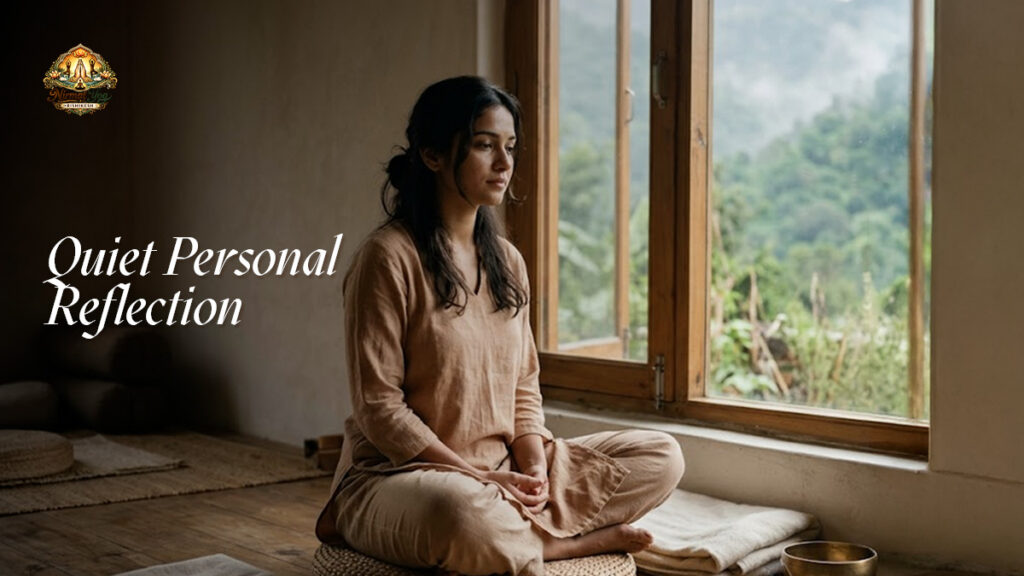
The final day often includes integration: a closing circle, practical suggestions for home practice or simply time to reflect before departure.
The real test begins when one returns to emails, traffic, family responsibilities and old routines. Of trying to preserve the retreat exactly as it felt choose one or two sustainable practices:
- Ten minutes of morning breathing or meditation.
- One sound bath, yoga class or quiet walk.
- A consistent sleep window.
- A short evening check‑in: “What did I need today? Did I give it to myself?”
A yoga and sound healing retreat is not an escape from life. At its best it is a controlled experiment in living then choosing which parts of that experience deserve a place in ordinary life.
Final Thoughts
A yoga and sound healing retreat works because yoga and sound healing retreat removes the noise enough for you to hear what your body and mind have been saying. Yoga gives you structure. The food and rest restore energy. Sound healing offers a chance to do nothing except listen. I feel that this quiet time lets the body speak.
You do not need to arrive flexible, calm or spiritually advanced. You only need willingness: to slow down, feel what arises and take one practice home. That is where yoga and sound healing retreat stops being an event and starts becoming a change. I see that small shifts can grow into changes.
Frequently Asked Questions
No. Most retreats beginners and provide modifications. If one has an injury, medical condition or pregnancy inform the organisers beforehand so teachers can adapt the practice appropriately.
Comfortable yoga clothing, a shawl or light blanket, personal toiletries, a refillable water bottle and any medication one needs. Many retreats provide mats and props. Check the packing list before travelling.
Possibly. Falling asleep is common. Does not mean one did it wrong. Sound healing is primarily a relaxation experience. Rest itself can be beneficial.
No. Sound healing may support relaxation and stress reduction for some people. It should not replace medical care. Treat claims of curing psychological conditions with caution.
A three‑ to five‑day retreat is often an introduction. It gives time to settle into the rhythm without requiring a long absence from work or family. Longer retreats suit those who want immersion.