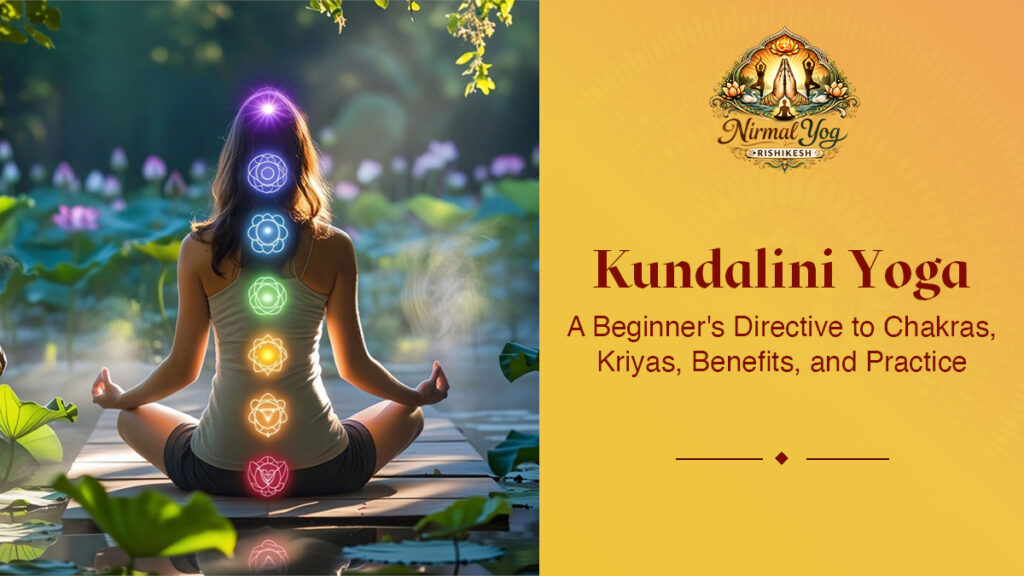
When one mixes physical movement, breathing techniques, meditation, mantras, and mindfulness into one practice, what results is one of the most thorough forms of yoga, called Kundalini Yoga. It brings together mind, body, and breath to help with overall growth and well-being of a person, instead of placing emphasis on just strength, flexibility, etc.
Kundalini Yoga says that the body isn’t just a physical structure. One can find improved awareness, concentration, balance, and clarity along with just better health. The focus is on being conscious and consistent, instead of mastering advanced postures.
People all over the world practice Kundalini Yoga to get rid of stress, have better focus, and understand themselves better. It doesn’t matter if you’re a beginner or an advanced practitioner; Kundalini Yoga is appropriate for all.
What Is Kundalini Yoga?
Kundalini comes from a Sanskrit word meaning “coiled.” In yogic philosophy, it is thought to be a life force at the base of the spine. We balance and guide this energy through the chakras, the main energy centers of the body, using breathwork, meditation, and mantras.
The various practices that come under Kundalini Yoga are:
Kriyas
A sequence of postures that has been carefully designed, keeping in mind specific purposes, is called a kriya. They may work to support digestion, help build concentration, make the nervous system stronger, or help to relax.
Pranayama
Pranayama is central to Kundalini to promote breath awareness, help in focusing better, and improve respiratory health.
Mantras
Mantras are the sacred words that are repeated loudly or silently, and they help to clear the mind and concentrate.
Meditation
Meditation is an amalgamation of controlled breath, visualization, eye focus, or mantra chanting. It helps in becoming more mindful, emotionally balanced, and focused.
Understanding the Seven Chakras
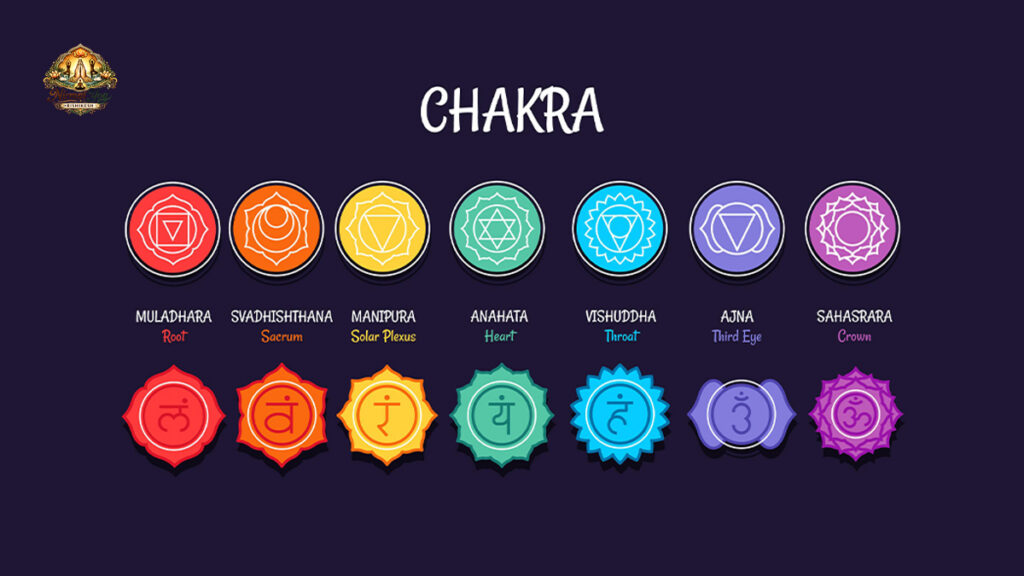
There are seven main energy centers, in the chakra system, that go from the base of the spine up to the crown of the head. Each chakra is related to different physical, emotional, and spiritual features. Together, they help with the flow of energy throughout the body in a healthy way.
The seven chakras are:
1. Muladhara – Root Chakra
It is located at the base of the spine, is related to stability and security, and includes grounding postures, squats, and leg-strengthening movements.
2. Svadhisthana – Sacral Chakra
It is located at the lower abdomen and is related to creativity, emotions, and relationships. Hip-opening exercises and gentle pelvic movements generally support this chakra.
3. Manipura – Solar Plexus Chakra
It is located at the upper abdomen and represents confidence, motivation, and personal strength. Core exercises and Breath of Fire are common practices that focus on this chakra.
4. Anahata – Heart Chakra
It is located at the centre of the chest and is associated with compassion, kindness, and love. Chest-opening movements and heart-centered meditations focus on this energy centre.
5. Vishuddha – Throat Chakra
It is located at the throat and is related to communication and honesty. In Kundalini Yoga, chanting, breathwork, and neck movements are commonly used.
6. Ajna – Third Eye Chakra
It is located between the eyebrows and is associated with intuition and mental clarity. Meditation practices often also include gentle eye focus (Trataka).
7. Sahasrara – Crown Chakra
It is located at the top of the head and is typically associated with higher awareness and a sense of connection. Meditation and quiet reflection are commonly linked with the crown chakra.
Each chakra is associated with its color, mantra, and symbolic meaning.
What Happens in a Kundalini Yoga Class?
A very distinctive feature of Kundalini Yoga is its consistent class structure. While individual kriyas vary, most classes follow a similar arrangement.
Classes generally start with a short centering practice in which we chant Ong Namo Guru Dev Namo three times, followed by gentle warm-up exercises, e.g., seated spinal flexes, shoulder rolls, and neck movements. This entire process takes about 5 to 10 minutes.
The main part of the class is the kriya, which takes about 30 to 45 minutes. Depending on its purpose, a kriya includes repetitive movements, stable postures, breathwork, core-strengthening exercises, arm movements, mantra chanting, and meditation. Each kriya is usually practiced in a specific order for supporting its intended purpose.
After doing the kriya, practitioners rest in Savasana (corpse pose). The remaining 7 to 11 minutes of the rest period allow the body to recover and absorb the effects of the practice.
Most classes conclude with a guided meditation of about 11 to 31 minutes using breath awareness, mantra repetition, mudras, visualization, and focused attention.
Yoga classes conclude with the mantra Sat Nam, a peaceful and meaningful way to finish the practice.
Common Kundalini Yoga Poses
Kundalini Yoga uses many familiar yoga postures along with distinctive movements and breathing practices.
Easy and familiar beginner-friendly poses are:
- Easy Pose (Sukhasana)
- Cat-Cow Stretch (Chakravakasana)
- Cobra Pose (Bhujangasana)
- Child’s Pose (Balasana)
- Triangle Pose (Trikonasana)
The above postures are done with breathing consciously instead of focusing just on flexibility or perfect alignment.
Benefits of Kundalini Yoga
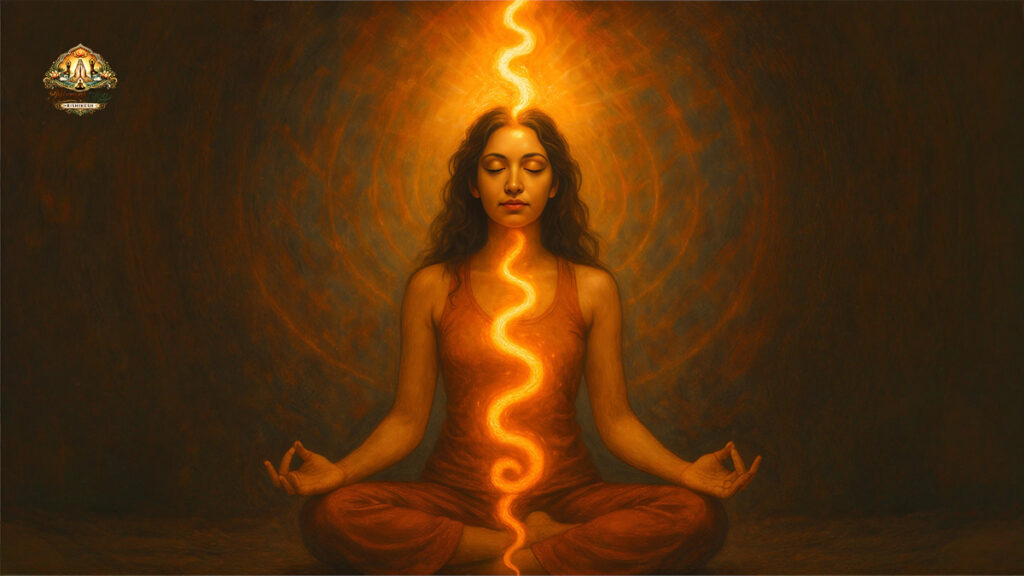
Consistent practice can support health in many ways.
Physical Benefits
- Helps in improving flexibility and posture
- Improves core strength and spine
- Makes lung capacity better
- Supports healthy circulation
- Improves body awareness
- Helps form a resilient nervous system
Mental and Emotional Benefits
- Helps in managing everyday stress
- Improves concentration and focus
- Encourages emotional balance
- Supports relaxation and helps with better sleep
- Helps in developing mindfulness
- Promotes better mental clarity
Personal Well-Being
- Helps to develop better self-awareness
- Helps build discipline and consistency
- Can improve the connection between their breath and movement
- Helps to develop a calmer philosophy to daily life
- Helps in feeling more balanced and centered
Individual experiences may be different, and the benefits generally develop through regular practice over time.
Kundalini Yoga for Beginners
Kundalini Yoga suits beginners as it can be adapted to different experience levels. You do not need very high flexibility or any previous yoga experience to start.
Beginner classes mostly focus on:
- Learning basic postures
- Understanding breathing methods
- Developing meditation skills
- Having better body awareness
- Making a consistent practice routine
When starting, it is better to learn from a qualified teacher who can show proper techniques, help with modifications, and make sure that one practices safely.
Simple habits can also make your experience better:
- Wear comfortable clothing.
- Do regular practice.
- Stay hydrated.
- Listen to your body.
- Be patient as you learn the techniques.
Safety Considerations
Although Kundalini Yoga is suitable for many people, it should be approached slowly.
It is essential to keep in mind the following:
- Start with beginner-level classes.
- Don’t skip the relaxation period after kriyas.
- Learn from a skilled, qualified teacher.
- Modify practices in case of injuries or medical conditions.
- Seek guidance if you are pregnant.
- If you have a history of serious mental health conditions, speak to a qualified healthcare professional before starting an intensive meditation practice.
Steady, consistent practice is usually better than trying advanced techniques too soon.
Kundalini Yoga vs. Hatha Yoga vs. Vinyasa Yoga
All three styles have traditional yogic roots, but have different focuses.
Kundalini Yoga vs. Hatha Yoga
Hatha Yoga is mainly about physical postures, flexibility, alignment and awareness of breath. Kundalini yoga involves movement, meditation, mantra, breathing techniques and kriyas (specific, structured exercises). It places equal emphasis on physical, mental and emotional practices.
Kundalini Yoga vs. Vinyasa Yoga
Vinyasa yoga connects breath and movement in a continuous flow, often leading to a physically dynamic workout. Kundalini Yoga is not about flowing sequences; it employs repetitive movements, breathwork, chanting, meditation and specific kriyas.
If you want a continuous movement practice, Vinyasa is the style for you. If you are looking for a more meditative and breath-centered practice, Kundalini Yoga is the style for you. Many people like to train in both styles because they complement each other.
Why Practice Kundalini Yoga in Rishikesh?
Rishikesh is called the yoga capital of the world and is the hub of spirituality in India, attracting yoga practitioners from all over the world for generations. Located in the Himalayan foothills along the sacred river Ganges, the city offers the perfect environment for engaging in Kundalini Yoga.
Several students who study Kundalini Yoga in Rishikesh learn a mix of the traditional yoga philosophy, kundalini kriyas, meditation, pranayama, mantra chanting, and yogic lifestyle practices
Learning in an immersive setting lets students experience Kundalini Yoga within the larger context of traditional yogic teachings.
Final Thoughts
Kundalini Yoga helps in bettering health by mixing movement, breathwork, meditation, mantra chanting, and mindfulness. It doesn’t focus only on physical fitness; rather, it promotes greater awareness, emotional resilience, mental clarity, and overall well-being.
Whether you want to be more flexible or manage stress or strengthen your body or establish a regular meditation routine, Kundalini Yoga helps make a proper path that can be adapted to every stage of your yoga journey. With regular practice and guidance, it can be a valuable discipline for life that helps with both physical health and inner balance.
Frequently Asked Questions
Kundalini Yoga helps with overall well-being by mixing physical movement, breathwork, meditation, and chanting mantras. If we go by traditional yogic philosophy, these practices help develop better self-awareness, improve focus, support emotional balance, and promote the healthy flow of energy in our body.
Yes. Kundalini Yoga is safe and suitable for beginners since you can change many practices to fit different experience and fitness levels. One may start with beginner-friendly classes under the guidance of a good teacher and learn proper breathing techniques, postures, and modifications while practicing safely.
Unlike Hatha or Vinyasa Yoga, Kundalini Yoga gives equal importance to movement, breathwork, meditation, mantra chanting, and kriyas. Instead of only focusing on flexibility or physical exercise, it aims to help with physical, mental, and emotional well-being via a balanced practice.
Beginners can practice twice or thrice a week and slowly increase the frequency as they get more comfortable. Even short, regular sessions are better than occasional long practices. Listening to your body and having a routine are important to long-term progress.
Wear comfortable, breathable clothing that lets you move freely. Get a water bottle and a yoga mat for your use. Some yogis also choose to bring a light blanket or meditation cushion for relaxation and seated meditation, but that is entirely optional.