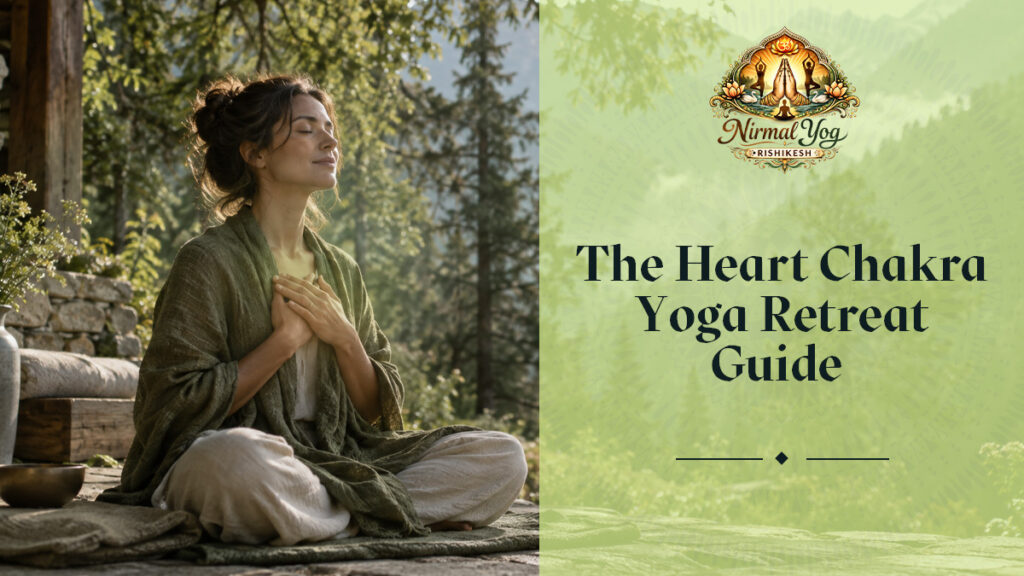
Some parts of yoga are easy to see: the shape of a posture, the rhythm of a sequence, or the steadiness of the breath. The heart chakra is less visible. You notice it through the way you give, receive, trust, protect yourself, set boundaries, and respond when emotions become uncomfortable.
A Heart Chakra Yoga Retreat creates time to explore those patterns through yoga rather than through labels alone. It may combine asana, pranayama, meditation, sound, philosophy, and reflection. The purpose is not to promise instant emotional healing. It is to help participants pay closer attention to what is happening in the body, breath, and mind.
What Does the Heart Chakra Represent in Yoga?
In yogic tradition, the heart chakra is called Anahata and is commonly described as the fourth of the seven principal chakras. It is associated with the centre of the chest and is often presented as a meeting point between the lower and upper energy centres.
Calling Anahata simply “the chakra of love” leaves out much of its meaning. Heart-centred practice also concerns compassion, grief, trust, forgiveness, self-respect, attachment, and the ability to care without abandoning personal limits.
This becomes clearer through practical questions. Can you accept support as easily as you offer it? Do you remain present during disagreement, or withdraw immediately? Does kindness sometimes turn into over-giving? These questions make the chakra system useful as a framework for self-observation, rather than a test that declares someone spiritually open or blocked.
Green Aura Meaning and Its Link with Anahata
The Meaning of Green Aura is frequently discussed alongside Anahata because green is widely associated with the heart chakra in contemporary chakra teachings. Within spiritual traditions, a Green Aura may symbolise compassion, renewal, harmony, emotional warmth, or a period of personal growth.
The two ideas are related, but they are not identical. Anahata belongs to the yogic subtle-body system. Aura language appears across a broader range of spiritual and esoteric traditions. Modern wellness writing often blends them because both use green to represent qualities connected with the heart.
It is also important to separate symbolism from scientific or medical fact. An aura is not a clinically measurable sign of emotional or physical health. In retreat practice, green visualisation can serve as a concentration aid—a way to hold attention on qualities such as spaciousness, care, or renewal. The colour is a point of focus; it is not the practice itself.
Is a green aura the same as an open heart chakra?
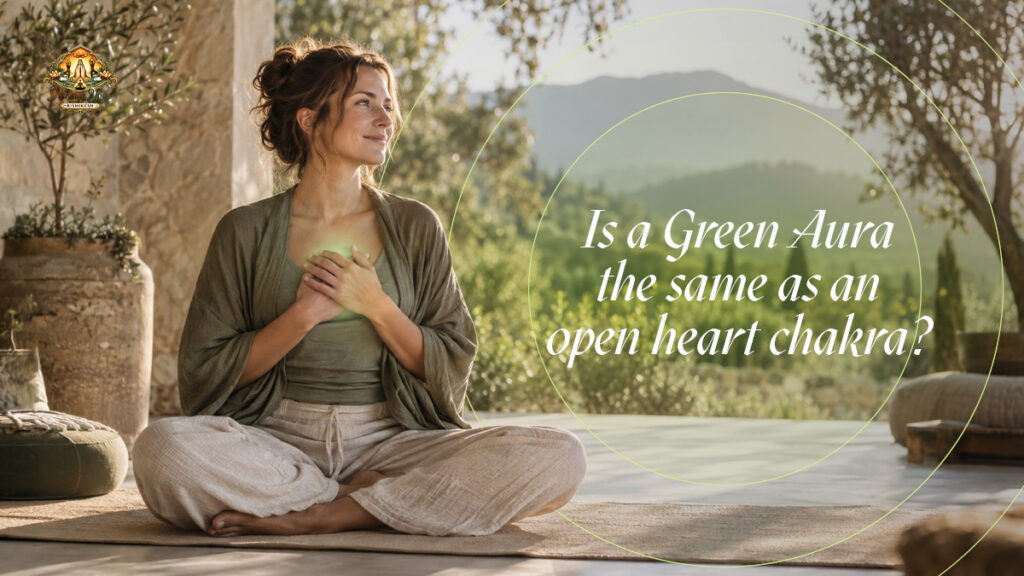
Not exactly. A green aura and an open heart chakra share symbolic themes, but neither should be used to diagnose a person or explain every emotional experience. A more useful question is not “Is my aura green?” but “What does green invite me to notice in my behaviour, breath, and relationships?”
Heart Chakra Signs: What Should You Actually Notice?
Searches for Heart Chakra Signs often lead to rigid checklists. One feeling is labelled “blocked”; another supposedly proves that the chakra is open. Human emotion is rarely that neat. Feeling guarded after disappointment, for example, does not mean something is wrong with your energy.
Within yoga practice, the language of balance can be used more responsibly as an invitation to observe recurring patterns. These may include:
- difficulty receiving help, affection, or appreciation;
- holding resentment long after an event has passed;
- avoiding vulnerability or withdrawing during difficult conversations;
- seeking approval while neglecting personal needs;
- giving continuously without clear boundaries;
- speaking to yourself with less patience than you offer others.
These experiences are not medical evidence of a blocked chakra. They are areas that heart-centred yoga, journaling, or meditation may bring into awareness. Persistent emotional distress deserves appropriate professional support; a retreat can complement reflection, but it should not replace mental-health or medical care.
How a Heart Chakra Yoga Retreat Approaches Healing
People asking How to Heal Heart Chakra often expect one decisive technique: a backbend, mantra, colour visualisation, or meditation. A considered retreat takes a more layered approach. Different practices reveal different parts of the same pattern, and several days of continuity allow the theme to develop without rushing toward a result.
Asana without forcing the body
Heart-opening yoga is often represented by dramatic backbends, but deeper is not automatically better. Bhujangasana, Ustrasana, and Setu Bandhasana may draw attention to the front of the chest, yet the shoulders, thoracic spine, pelvis, and breath all influence how safely a pose is experienced.
A well-taught sequence may include gentle shoulder mobility, supported chest openers, spinal movement, and restorative postures before stronger backbends. The aim is not to manufacture an emotional release or achieve an impressive shape. It is to notice effort, resistance, breathing, and sensation without aggression.
Pranayama as attention training
Pranayama is more precise than simply taking deep breaths. Participants may observe whether breathing feels hurried, restricted, uneven, or held during discomfort. Suitable techniques can encourage steadier attention, but they should be introduced progressively and adjusted to the student’s experience and comfort.
This matters in a retreat because participants arrive with different histories. What feels calming to one person may feel unfamiliar to another. Responsible instruction values technique, pacing, and ease over intensity.
Meditation and the quieter work
Meditation is where the practice often becomes less decorative and more honest. Old memories may arise. You may notice self-criticism, impatience, defensiveness, or the urge to escape silence. Nothing dramatic needs to happen for the session to be useful.
The skill is learning to observe a feeling before automatically reacting to it. Over time, even a small pause between emotion and response can change the quality of a conversation, decision, or boundary.
Why Rishikesh Is a Meaningful Setting for Heart-Centred Practice
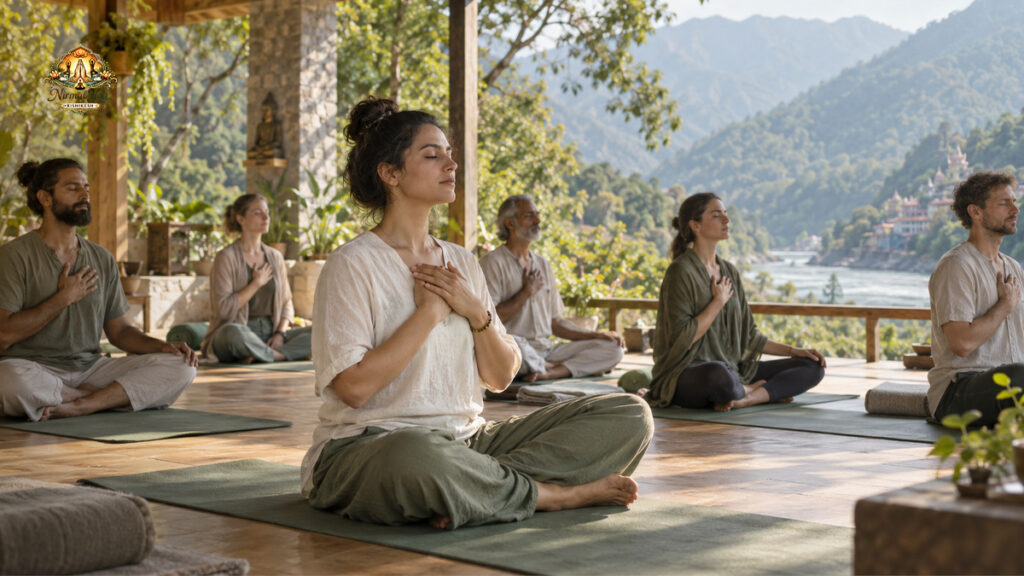
Rishikesh is closely associated with yoga study, meditation, and spiritual practice. Its value, however, is not limited to familiar images of the Ganga, temples, and Himalayan foothills. Leaving everyday routines can change the pace at which attention works.
At home, meditation may be fitted between messages, meetings, and responsibilities. On retreat, practice becomes part of the day’s structure. Asana can be followed by breathwork; a philosophy discussion may continue through journaling; silence can remain unfilled. This continuity is often more valuable than the number of activities on the schedule.
At Nirmal Yog Rishikesh, the wider retreat environment already brings together yoga, philosophy, sound-based practice, mindful living, pranayama and meditation. These elements provide a natural foundation for exploring a heart-centred theme with context rather than treating it as an isolated workshop.
Who May Benefit from a Heart Chakra Yoga Retreat?
You do not need advanced flexibility or detailed knowledge of the chakra system. A heart-focused retreat may suit people who want to reconnect with yoga beyond exercise, build a steadier meditation habit, explore the Green Aura as spiritual symbolism, or examine how they respond to closeness, conflict, care, and boundaries.
It may also interest yoga students and teachers who want to understand how asana, breath, meditation, and philosophy can support one another. Before booking, ask how the retreat handles different ability levels, what practices are included, whether participation is adaptable, and how teachers describe “healing.” Clear, responsible answers matter more than dramatic promises.
Final Thoughts
The most useful question after a Heart Chakra Yoga Retreat may not be, “Is my heart chakra open now?” A better question is, “What am I noticing that I did not make time to notice before?” The answer may involve tension, an old resentment, difficulty receiving support, or the simple recognition that rest has been missing.
A Green Aura, an Anahata symbol, or a heart-opening posture can guide attention, but none replaces honest practice. A thoughtful retreat offers something quieter and more practical: time to move, breathe, reflect, and meet familiar patterns with clearer awareness.
Frequently Asked Questions
It is a themed yoga retreat that explores Anahata through practices such as asana, pranayama, meditation, reflection, philosophy, mantra, or sound. The exact schedule varies, so participants should check what is actually included before booking.
In yoga, heart chakra healing is best approached as a gradual reflective practice rather than a guaranteed cure. Movement, breath awareness, meditation, healthy boundaries, and compassionate self-observation may all contribute. Serious emotional or health concerns should be discussed with a qualified professional.
In spiritual traditions, a green aura commonly symbolises compassion, renewal, balance, and emotional openness. It is a symbolic interpretation, not a scientific measurement or medical diagnosis.
Many retreats welcome beginners, but every program is different. Review the daily schedule, physical intensity, accommodation, teacher guidance, and available modifications. Inform the organiser about injuries, health conditions, or other needs before attending.