
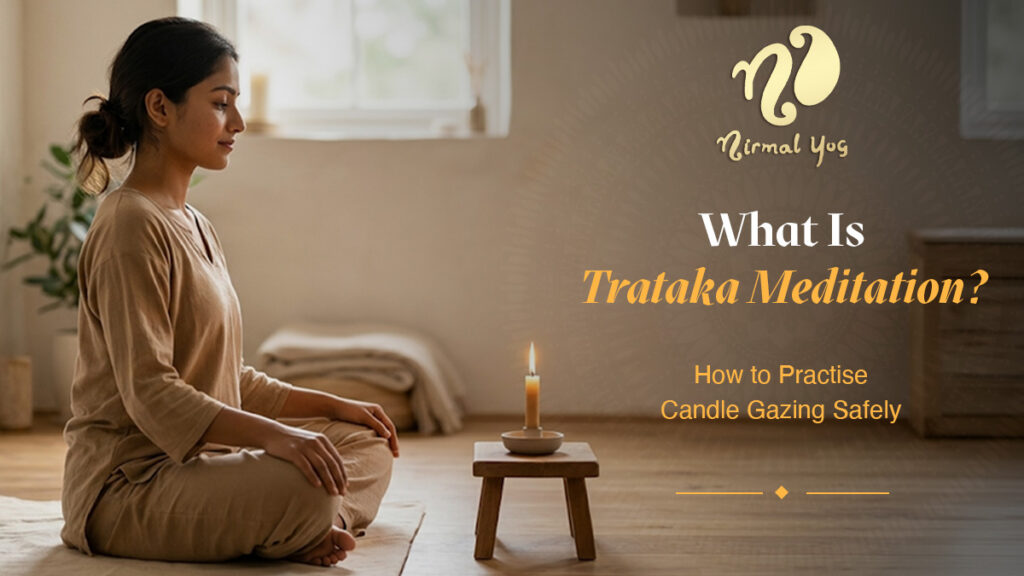
A candle flame can hold your attention in a way few objects can. Trataka meditation uses that pull toward a single point of focus, usually a steady candle flame to train attention, settle the mind and create a quiet transition into meditation.
In yoga trataka is a cleansing and concentration practice. In wellness settings, it is often called candle gazing or Tratak Meditation. The names differ. The core method is the same: look steadily at one object then close the eyes and observe the impression it leaves behind.
The practice can be simple. It is not about staring until your eyes hurt. Done carelessly candle gazing can cause dryness, strain or headaches. Done with the setup and a gentle approach it can become a useful Tratak exercise for focus and relaxation.
What Trataka Means in Yoga
The Sanskrit word trataka is commonly translated as “to gaze” or “to look steadily.” It belongs to the shatkarma group of yogic purification practices. It is also used as a dharana or concentration practice in many yoga traditions.
Unlike breath‑focused meditation, Trataka meditation gives the mind an anchor. For someone who finds it difficult to sit still or follow the breath watching a flame can feel more immediate. The flame moves slightly and changes shape. Give the attention something concrete to return to.
A typical session has two phases:
- External Trataka: You gaze at an object most often a candle flame.
- Internal Trataka: You close your eyes. Observe the afterimage or mental impression of that object.
That second phase is where candle gazing becomes meditation. You are not trying to force an image to remain; you are noticing how attention behaves when the outer stimulus disappears.
Why People Practice Trataka
The immediate benefit many practitioners notice is improved ability to sustain attention. A flickering flame gives the mind a task: return to the point of focus whenever it wanders.
Traditionally Trataka has been associated with concentration, mental clarity and preparation for meditation. Modern research is still limited, but small studies and reviews suggest benefits for visual fatigue, attention and cognitive function. One review of trials reported reduced visual fatigue and lower intraocular pressure while also noting that the evidence base remains small and short‑term.
It is sensible to treat Trataka meditation as a focus and relaxation practice not as a treatment for eye disease. Claims that it cures myopia, glaucoma, cataracts or other eye conditions are not well supported by clinical evidence.
How to Practice Candle Gazing Step by Step
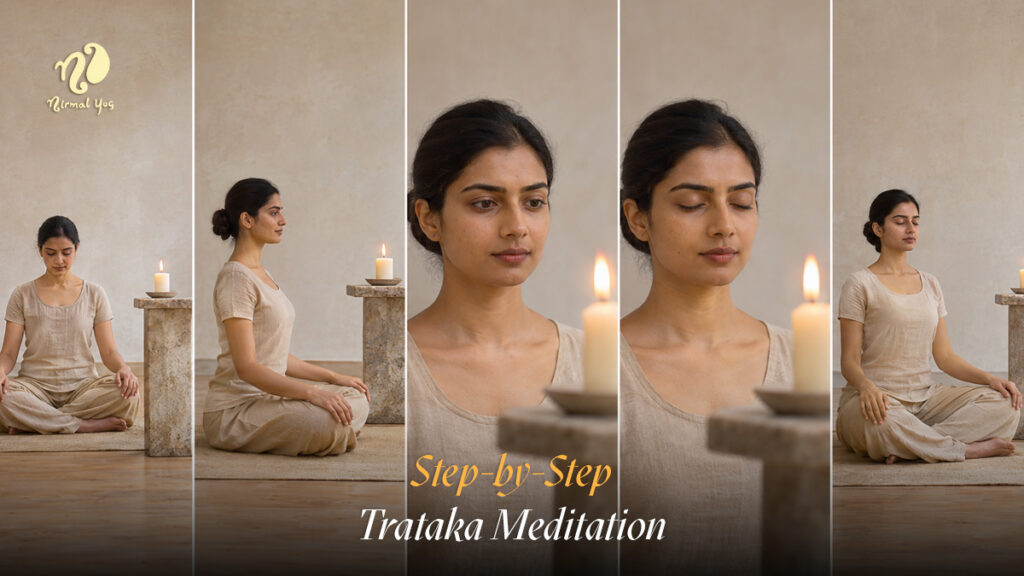
You do not need equipment beyond a stable candle, a safe surface and a quiet room. Start small. Two to five minutes is enough for a session.
Set Up a Safe Calm Space
Choose a room with indirect light. Complete darkness can make the flame feel harsh; a little ambient light is usually more comfortable. Keep the candle on a heat‑resistant surface away from curtains, paper, children and pets. Never leave a burning candle unattended.
Place the candle about at eye level or a little below it an arm’s length away. If the candle is too high it can cause tension around your forehead and eyes. If the candle is too low you might tilt your head forward without noticing.
Sit Comfortably With a Steady Spine
Sit cross‑legged on the floor or upright on a chair. Keep your back relaxed but upright, let your shoulders soften and let your hands rest comfortably.
Take three or four breaths before you begin. Let the jaw loosen. This is more important than it may seem: many people bring tension into meditation through the face, eyes and shoulder
Gaze Softly at the Flame
Open your eyes. Look at the upper brightest part of the flame. Keep the gaze soft or wide‑eyed or forceful. Try not to blink but do not see blinking as a mistake. Blinking protects your eyes. Forcing yourself not to blink for periods can cause dryness and irritation.
A practical starting point is ten to thirty seconds of gazing. Over weeks you can gradually extend this if your eyes stay comfortable. Some traditional instructions allow sessions but comfort and safety should guide the duration, not a fixed target.
Close Your Eyes. Watch the Afterimage
When your eyes begin to water, tire or feel warm, close them gently. Do not rub them.
Behind the eyelids you may see an impression of the flame. Watch it without trying to hold it in place. It may brighten, fade, shift or disappear. That is normal.
Rest here for a minute or two. If no afterimage appears simply visualize the candle flame lightly. Stay with the darkness and your breath. Forcing the image creates tension, which defeats the purpose of the practice.
Repeat Gently or End the Session
Beginners can repeat the open‑eye and closed‑eye cycle two or three times. Experienced practitioners may prefer one longer unhurried round.
A Simple Beginner Routine
If you prefer structure, use this as a starting point. Adjust the timings based on comfort rather than trying to match someone else’s practice.
- Preparation-1 To 2 minutes: Set up safely, settle the body and take a few breaths.
- Gazing-10 To 30 seconds initially: Keep the gaze soft and relaxed.
- Gazing-1 To 2 minutes: Observe the afterimage without forcing it.
- Rest-1 To 2 minutes: Let the eyes and mind settle before moving on.
- First session-3 To 5 minutes: Stop before discomfort begins.
Safety Rules for Tratak Meditation
- Stop if you feel pain, burning, persistent blurred vision or a headache. Mild watering can occur; pain is a signal to stop.
- Do not force non‑blinking. A relaxed gaze is more useful than a stare.
- Avoid sun gazing. Some traditional descriptions mention gazing at the sun. Direct sunlight can seriously damage the retina. Use a candle or another safe object instead.
- Keep the flame steady. A draft makes the flame flicker, which can increase eye strain and is also a fire risk.
- Do not practice while under the influence of alcohol or drugs. Reduced alertness increases both eye‑strain and fire‑safety risks.
Who Should Be Careful Or Avoid It
Speak with an eye‑care professional before practicing flame‑based Trataka if you have glaucoma raised eye pressure, significant dry eye, recent eye surgery, an eye infection or another serious eye condition.
People with epilepsy or a history of seizures should avoid focusing on a flickering flame. A steady object, such as a black dot may be a safer alternative but only, with appropriate guidance.
Anyone with a disorder, hallucinations or a related mental-health condition should consult a qualified mental-health professional before using intensive concentration practices.
Mistakes in Trataka Practice
The biggest mistake with Trataka is treating it like a test of endurance. A longer time does not mean results. If your eyes feel strained, Trataka has shifted from meditation into hard effort.
Another common mistake in Trataka is the setup. If a candle is close too high or in a drafty corner concentration becomes harder and the eyes may get irritated. A steady flame at a distance works far better than a dramatic flame that flickers inches from your face.
Finally many beginners skip the phase of Trataka. They open their eyes, stare at the flame and finish away. The closed‑eye observation is where Trataka turns into meditation. Give that part time.
Can Trataka Improve Eyesight?
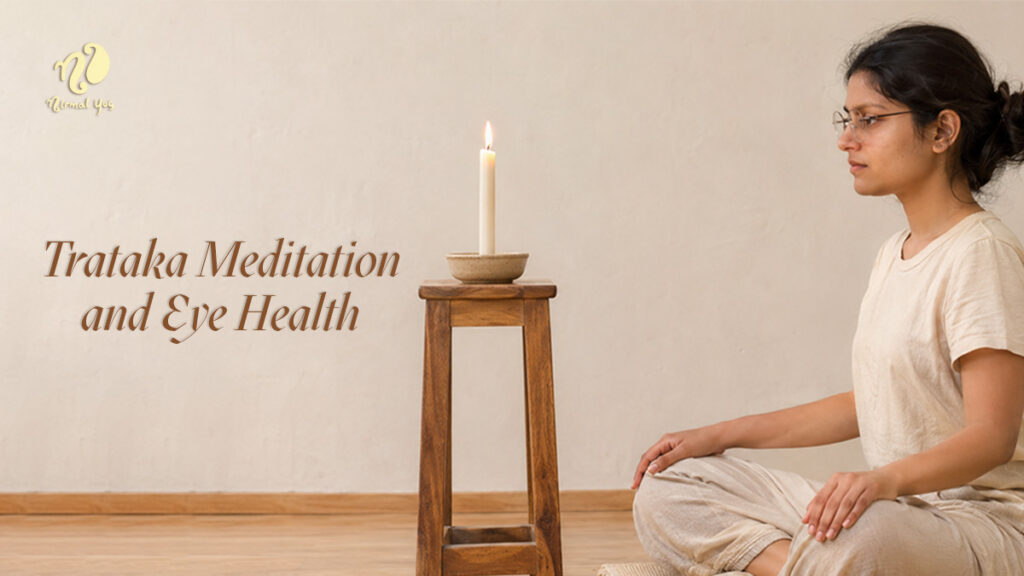
Honest information is needed here. Traditional yoga books link Trataka with eye health. Some people say Trataka reduces visual fatigue. But research on how Trataka affects vision is mixed and limited. A narrative review cited by Healthline says that evidence does not clearly support Trataka as a cure for eye disorders even though some studies looked at effects on pressure.
So can Trataka meditation help you relax and focus? Possibly. Can Trataka replace glasses, eye treatment or an ophthalmologist? No. I wonder if Trataka can replace glasses.
If your goal is eye comfort, pair Trataka with habits: follow the 20‑20‑20 rule while using screens, blink normally, stay hydrated and have regular eye exams.
How Trataka Fits Into a Yoga Practice
Trataka works before seated meditation, pranayama or bedtime wind‑down routines. Because Trataka narrows attention it can help settle a mind before you move into breath awareness or mantra meditation.
At a yoga retreat in Rishikesh, Trataka is taught with classical practices rather than as a single trick. The value comes from consistency: a few calm minutes of Trataka practiced regularly will usually help more than a long session.
Final Thoughts
Trataka meditation is less about mastering the flame and more about watching attention itself. The candle gives the mind a place to rest. The closed‑eye phase shows how quickly attention moves, fades and returns.
Practice it with patience. Starting with sessions protects your eyes and let comfort not ambition guide the pace. In this way Tratak meditation becomes a practical door to deeper focus and a gentler relationship, with your own mind.
Frequently Asked Questions
Trataka meditation is a concentration practice in which you gaze steadily at one point, usually a candle flame, then close your eyes and watch the afterimage. It is used to build focus and ready the mind for meditation.
Candle gazing is the familiar form of Trataka but Trataka can also use a black dot, flower, deity image or another steady object. The flame is popular because it naturally draws attention.
Begin with 10 to 30 seconds of looking at the flame and a total Trataka session of 3 to 5 minutes. Increase only if your eyes stay comfortable; do not push through pain or strain.
When practiced gently and safely, candle Trataka is generally at risk for most people without eye problems.. Forcing the gaze using a flickering flame or practicing with certain eye conditions can cause discomfort or risk. Consult an eye-care professional if you have glaucoma, eye surgery, significant dry eye or another eye concern.
There is not strong scientific evidence to say that Trataka improves eyesight or reverses refractive errors. Trataka may help some people feel visual fatigue but it should not replace professional eye care.