If you’ve ever walked out of a yoga class feeling calmer than when you walked in, you’ve probably experienced more than just a good stretch. Maybe your shoulders felt lighter. Your breathing slowed down. The endless chatter in your head became a little quieter. For a few minutes, you simply felt… present. Yoga philosophy has a beautiful way of explaining this experience through a concept called the five koshas. The word “kosha” is Sanskrit for “sheath” or “layer.” The idea is that we aren’t made up of just a physical body. There are different layers to our experience of being human – from the body we can see and touch to our breath, thoughts, deeper awareness, and ultimately, a sense of inner peace. The traditional term for these layers is “pancha kosha,” with “pancha” meaning “five.” You may also see it written as panchkosh.
At first, the concept can sound like one more complicated piece of yoga philosophy that requires a dictionary, a teacher, and perhaps a few years of study to understand. It really doesn’t. The interesting thing about the koshas is that you’ve already experienced them. You just may not have known their Sanskrit names. The 5 koshas simply give us a way to look at these experiences and understand how they’re connected. Let’s take a closer look.
What Are the Five Koshas?
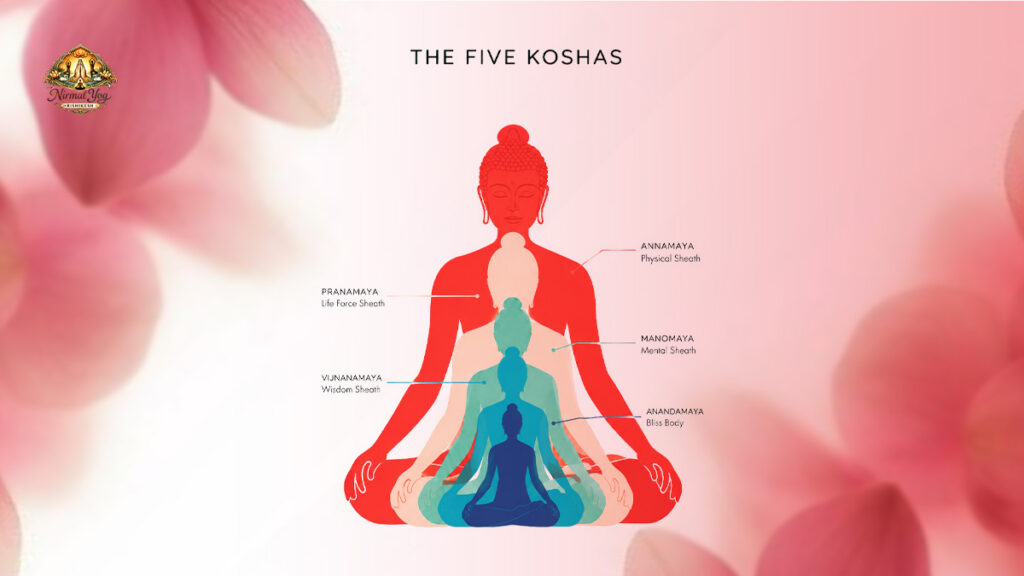
The concept of the five koshas comes from the Taittiriya Upanishad, one of the ancient texts associated with yogic philosophy. The five layers are
- Annamaya Kosha – the physical body
- Pranamaya Kosha – the breath and vital energy
- Manomaya Kosha – the mind and emotions
- Vijnanamaya Kosha – wisdom and inner discernment
- Anandamaya Kosha – bliss and deep contentment
They’re often compared to layers of an onion or a series of nesting dolls. The physical body is the outermost layer, while the deeper koshas represent subtler aspects of our existence. But there’s no need to imagine them as five separate compartments inside you. They’re constantly interacting. A stressful day can make your shoulders tense. Tension can change your breathing. Shallow breathing can make you feel even more anxious. And when you finally slow down and take a few deep breaths, your whole experience can change. That’s the beauty of the Pancha Kosha model. It reminds us that body, breath, mind, and inner awareness aren’t isolated from one another.
1. Annamaya Kosha: Your Physical Body
Let’s start with the layer that’s probably easiest to understand: your body. Annamaya Kosha is the physical sheath. The word “anna” means “food,” so it is often called the “food sheath.” It refers to the physical body and its relationship with nourishment and the material world. Your bones, muscles, skin, organs, tissues, and all the physical parts that make you who you are belong to this layer. It’s also the kosha we tend to notice first. You don’t have to think very hard about it when you’ve slept badly and your entire body feels heavy. Or when you’ve spent eight hours at a desk and suddenly realize your neck has become one giant knot. Your body is constantly communicating with you.
Unfortunately, many of us only listen when it starts shouting. Yoga asana gives us an opportunity to pay attention before that happens. As we move, stretch, strengthen, and rest, we become more aware of physical sensations. But Annamaya Kosha also teaches us something beyond simply taking care of our bodies. We have a body, but we aren’t only our bodies. Our appearance changes. Our strength changes. Our age changes. Our physical abilities change. The body is an important part of who we are, but the yogic tradition invites us to look beyond it too.
2. Pranamaya Kosha: The Breath and Vital Energy
Move a little deeper, and we come to Pranamaya Kosha. This layer is connected with prana, which is often described as vital energy or life force. One of the simplest ways to experience this kosha is through your breath. Try noticing your breathing the next time you’re stressed. You may find that your breath has become short and shallow. Perhaps your shoulders have crept upwards without you noticing. Maybe you’re even holding your breath.
Now imagine sitting down, relaxing your shoulders and taking a slow, comfortable breath. Something changes. Your body may soften. Your heart rate may settle. Your mind may feel slightly less frantic. This relationship between breath, energy, and our state of mind is central to Pranamaya Kosha. It’s also why breathing practices, or pranayama, are such an important part of yoga. The breath is fascinating because it’s both automatic and something we can consciously influence.
We don’t normally have to think about breathing, yet we can deliberately slow it down or change its rhythm. That makes the breath a wonderful bridge between the body and the mind. And sometimes, when you don’t know what else to do, simply paying attention to your breath is a pretty good place to start.
3. Manomaya Kosha: The Mind That Never Stops Talking
Now we get to a layer most of us know very well: Manomaya Kosha. This is the mental and emotional sheath. It includes our thoughts, feelings, reactions, memories, and sensory experiences. In other words, it’s the part of you that can turn a five-minute wait for a text message into an elaborate investigation. “Why haven’t they replied?” “Did I say something?” “Are they annoyed with me?” “Should I send another message?” Meanwhile, the other person may simply be in the shower. That’s the mind for you. Manomaya Kosha is not “bad.” In fact, we need the mind. It helps us make decisions, process information, interact with people, and navigate everyday life. The trouble begins when we become completely caught up in everything the mind says.
This is one reason meditation can be so helpful. Meditation isn’t necessarily about making your mind completely blank. If you’ve ever tried that, you already know how quickly the brain responds with a list of groceries, an old memory, and something embarrassing you said in 2014. Instead, the practice is to notice. “I am having this thought.” “I am feeling anxious.” “I keep replaying that conversation.” That tiny bit of distance can make a surprisingly big difference.
4. Vijnanamaya Kosha: The Part of You That Can Observe
Beyond the busy mind is Vijnanamaya Kosha, associated with wisdom, awareness, and discernment. If Manomaya Kosha is the part saying, “I’m angry, so I’m going to respond right now,” Vijnanamaya Kosha is the quieter voice saying, “I’m angry. Maybe I should wait before I respond.” That pause is where things get interesting. Vijnanamaya Kosha represents our ability to step back and observe ourselves. We begin to notice our patterns instead of automatically repeating them.
Have you ever reacted to something and later wondered, “Why did I react like that?” Or noticed that you keep ending up in the same kind of situation? That ability to observe yourself honestly is part of this deeper layer. It’s not about becoming perfectly calm, wise, or spiritual. It’s about becoming a little more aware. Meditation, contemplation, self-study, and mindful living can all help develop this quality of discernment. Sometimes wisdom doesn’t arrive as a dramatic revelation. Sometimes it sounds very ordinary: “I need to slow down.” “I don’t actually want to do this.” “I was wrong.” “I need to let this go.” That’s awareness in everyday life.
5. Anandamaya Kosha: A Deeper Sense of Bliss
And then we reach Anandamaya Kosha, the innermost of the five layers. Ananda is often translated as “bliss,” “joy” or “deep contentment.” Now, the word “bliss” can sound a little intimidating. It may bring to mind someone meditating on a mountain while birds sing around them and absolutely nothing goes wrong. That’s not quite what this idea is about. Think instead about a moment when you felt completely at peace. Maybe you were sitting quietly after meditation. Maybe you were watching the sunrise. Maybe you were walking in nature without your phone. Maybe you were laughing with someone you love and, for a few seconds, forgot about everything else.
Those moments don’t necessarily last forever. But while they’re happening, you aren’t chasing anything. You’re simply there. Anandamaya Kosha points towards that deeper experience of wholeness and contentment. It doesn’t mean you’ll never be sad, stressed, or frustrated again. Life will continue to be life. Rather, it suggests that beneath all the changing experiences of the body and mind, there is a deeper dimension of stillness and inner peace.
How the Five Koshas Work Together
Here’s where the 5 koshas become especially interesting. They’re not five completely separate layers that you move through one at a time. They’re interconnected. Imagine waking up after a terrible night’s sleep. Your body is exhausted. That’s Annamaya Kosha. Your energy feels low, and your breathing may be different. That’s Pranamaya Kosha. You’re more irritable than usual, and every little thing annoys you. That’s Manomaya Kosha.
Then you notice what’s happening and decide not to snap at someone. That’s Vijnanamaya Kosha. Later, you finally rest, switch off your phone, and feel a sense of quiet contentment. You’re touching the experience associated with Anandamaya Kosha. One experience can move through all these layers. This is why yoga is much more than physical exercise. The physical practice may begin with the body, but it can influence the breath, calm the mind, and create space for deeper awareness.
Why Understanding the Kosha Can Be Helpful

The real value of learning about the kosha isn’t memorising five Sanskrit words. It’s learning to notice yourself. The next time you’re feeling overwhelmed, instead of immediately asking, “What’s wrong with me?” try looking at the different layers. How does my body feel? How am I breathing? What thoughts or emotions are present? Am I reacting automatically, or can I pause and observe? What do I actually need right now? These questions can change the way you approach your yoga practice – and even the way you approach everyday life.
Bringing the Five Koshas Into Everyday Life
You don’t need to sit for an hour in meditation to explore the koshas. You can start right where you are. Pause for a moment and notice your body. Take a few slow breaths. Notice what your mind is doing without judging it. Ask yourself what you’re feeling beneath the surface. Then sit quietly for a moment and see what happens when you stop trying to fix anything. That’s it. There’s no test at the end. No prize for identifying every kosha perfectly. The practice is simply about becoming more aware.
Final Thoughts
The five koshas may come from an ancient yogic tradition, but the questions they raise are remarkably relevant to modern life. We spend so much time looking outward – at screens, schedules, work, relationships, responsibilities, and endless notifications. The Pancha Kosha teaching gently turns our attention inward. First, notice the body. Then the breath. Then the mind. Then the awareness behind the mind. And finally, those quiet moments of contentment that remind us that we are more than our worries, roles, and daily routines. Perhaps that’s the most beautiful thing about the five koshas.
They aren’t asking you to become someone completely different. They’re inviting you to slow down enough to notice the different parts of yourself – and to discover what has been there underneath all the noise. Sometimes, the journey inward isn’t about finding something new. It’s about finally noticing what was already there.
Frequently Asked Questions
The five koshas are five interconnected layers of human experience described in yogic philosophy: Annamaya Kosha (physical body), Pranamaya Kosha (breath and vital energy), Manomaya Kosha (mind and emotions), Vijnanamaya Kosha (wisdom and discernment), and Anandamaya Kosha (bliss or deep contentment).
“Kosha” is a Sanskrit word commonly translated as “sheath,” “covering,” or “layer.” In yoga philosophy, it describes different dimensions of our being, beginning with the physical body and moving towards subtler aspects of awareness.
Annamaya Kosha is the physical sheath. It represents the physical body, including the bones, muscles, organs, tissues, and other aspects of our physical existence. The word “anna” means “food,” reflecting the body’s dependence on nourishment.
Yes. Pancha Kosha and Panchkosh are commonly used spellings or transliterations for the same yogic concept of the five sheaths or layers of human existence.
You can explore the five koshas through yoga, pranayama, meditation, mindfulness, and self-reflection. Start simply by noticing your body, breath, thoughts, emotions, and moments of stillness. The idea is not just to understand the koshas intellectually but to recognize them through your own everyday experience.