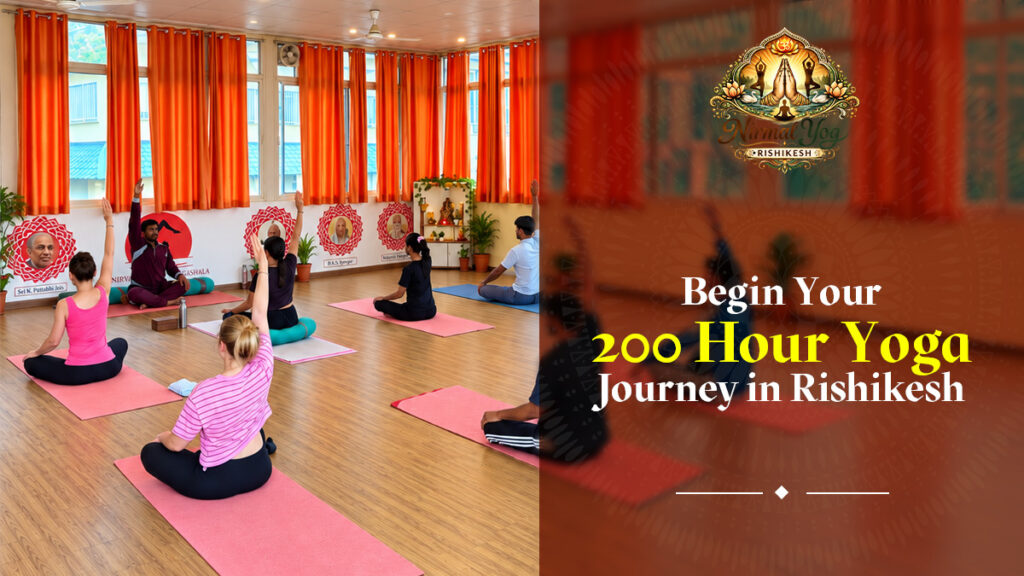
Choosing a 200 hour yoga teacher training in Rishikesh is about much more than collecting a certificate. For several weeks, yoga becomes the rhythm of your day: early practice, focused study, shared meals, self-observation and the first real experience of guiding someone else. It is demanding, but that is also what makes the course valuable.
A 200-hour program is the recognized foundational route for people who want to understand yoga in a structured way and begin learning how to teach it responsibly. At Nirmal Yog Rishikesh, the training brings together Hatha, Ashtanga and Vinyasa practice with pranayama, meditation, philosophy, anatomy, alignment and teaching methodology. Beginners can join, and previous teaching experience is not required. What matters more is consistency, curiosity and the willingness to follow an intensive routine.
What is a 200 hour yoga teacher training course?
A 200 hour yoga teacher training course in Rishikesh combines personal practice with teacher education. The hours are not limited to performing postures. A well-planned curriculum teaches you why a practice is used, how the body responds, how to communicate instructions and how to make sensible choices for different students.
Yoga Alliance describes RYS 200 as a foundational training standard covering essential techniques, anatomy, philosophy and professional development. After completing an eligible course at a Registered Yoga School, a graduate may apply for the RYT 200 credential under Yoga Alliance’s current process. Registration is separate from the course certificate, and requirements set by employers or local authorities may still apply where you intend to teach.
The training is equally useful for students who do not plan to teach immediately. Many join because casual classes no longer answer their questions. They want to understand
alignment, breath, sequencing and philosophy with more depth, then bring that understanding back to their own practice.
What you learn during the 200 hour yoga TTC in Rishikesh?
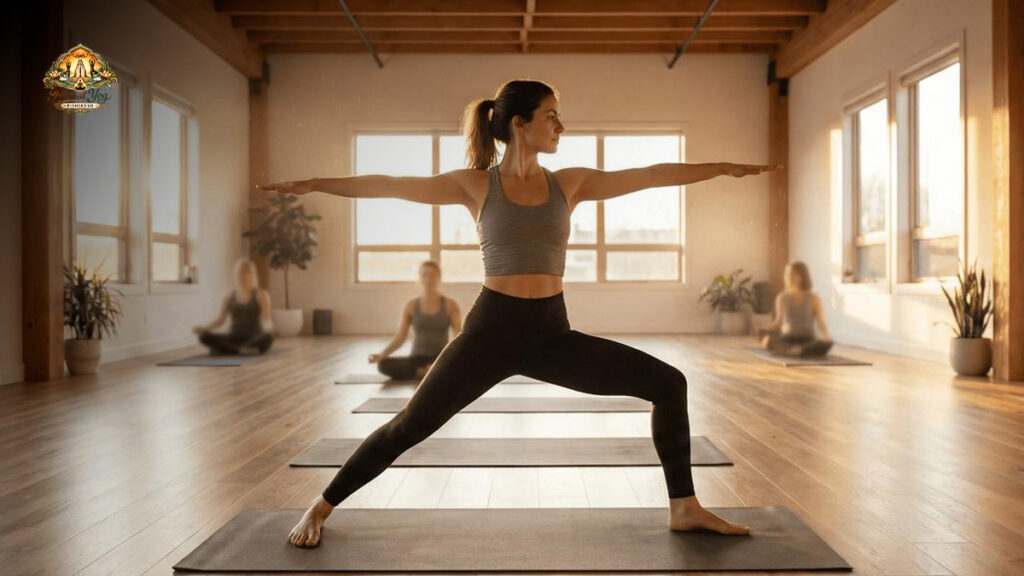
The course moves between practice, theory and application. Each subject supports the others, so anatomy is connected to alignment, philosophy is related to daily choices, and teaching methodology is tested through practice teaching.
Hatha Ashtanga and Vinyasa practice
Daily asana sessions introduce traditional Hatha Yoga, classical Ashtanga Yoga and Vinyasa Flow. You work on posture foundations, transitions, stability, mobility and breath awareness. The purpose is not to chase advanced shapes. It is to notice how a posture is built, where unnecessary strain appears and how a movement can be adapted without losing its intention.
Learning more than one style also helps you recognize their different pace and structure. Hatha often gives you time to observe a posture closely, while Vinyasa develops the connection between breath and movement. Ashtanga introduces a disciplined sequence and repetition. Together, they give a future teacher a broader base from which to develop.
Pranayama meditation mudras and bandhas
Breathwork and meditation are part of the daily learning rather than optional extras. The program introduces practices such as Nadi Shodhana, Kapalabhati, Bhastrika, Ujjayi and Bhramari, along with breath awareness, mantra meditation and Trataka.
Students also study selected mudras and the foundational bandhas: Mula Bandha, Uddiyana Bandha and Jalandhara Bandha. These techniques require careful explanation and supervised practice. The goal is to understand their traditional context, method and precautions instead of treating them as quick wellness tricks.
Yoga philosophy beyond the mat
Yoga philosophy gives context to the physical practice. The study may include the Yoga Sutras of Patanjali, teachings from the Bhagavad Gita, the Pancha Kosha model and traditional ideas related to prana, nadi and chakras. These topics become more useful when they are discussed in relation to attention, discipline, habits and the way a teacher holds space for students.
A good philosophy class does not ask you to memorise impressive Sanskrit terms. It helps you ask better questions: What is the purpose of practice? How should a teacher act? How can yogic principles be understood without removing them from their cultural roots?
Anatomy alignment and safe adaptation
Anatomy lessons cover the skeletal and muscular systems, joint movement, breathing mechanics and the nervous system. This knowledge helps you move from copying a pose to observing what is happening in a real body.
Alignment sessions then turn theory into practical decisions. You learn verbal cues, the use of props, suitable modifications and the role of consent in hands-on adjustments. Since bodies differ in proportion, mobility, injury history and experience, responsible teaching cannot depend on forcing everyone into one visual version of a pose.
Teaching methodology and practice teaching
Knowing a sequence is different from teaching it. Methodology sessions focus on class structure, demonstration, observation, voice, pacing and clear cueing. Students practise planning and guiding classes, then use feedback to improve.
This is where confidence becomes more realistic. You learn how much information students can absorb at one time, how to offer a modification without making someone feel singled out, and how to keep the purpose of a class clear from beginning to end. The course also introduces the ethics and responsibility involved in teaching yoga.
Shatkarma and traditional practices
The curriculum includes an introduction to traditional cleansing practices such as Jala Neti, Kapalabhati as a kriya and Trataka, with a basic understanding of Dhauti. These practices have precautions and contraindications, so they should be learned under qualified supervision. Instruction should explain when a technique is unsuitable, not simply how it is performed.
Why study yoga teacher training in Rishikesh?
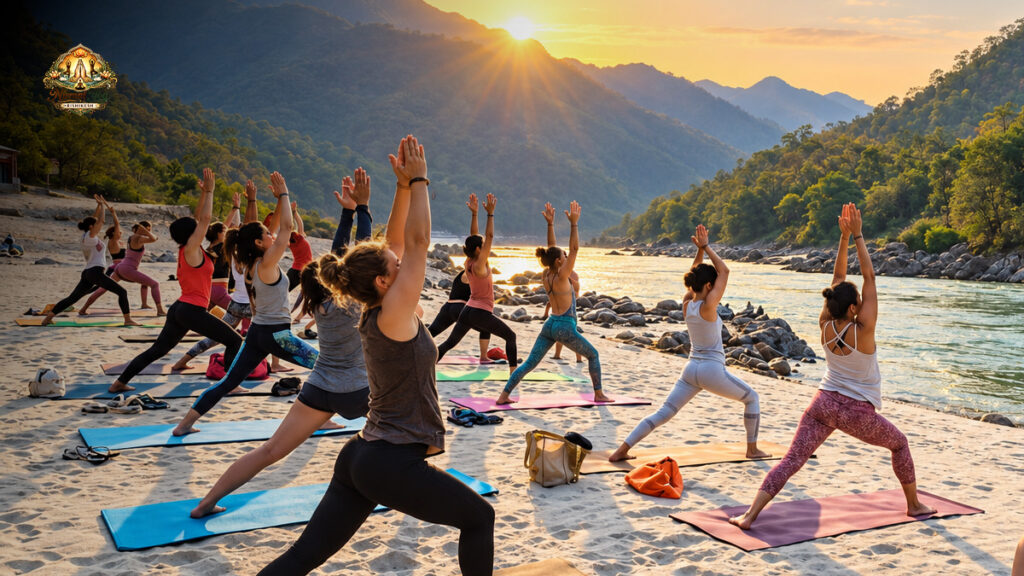
Rishikesh gives the course a setting that is difficult to recreate in an ordinary weekly schedule. Yoga schools, ashrams, temples and the River Ganga are part of daily life, while the Himalayan surroundings create some distance from familiar routines. That change of environment can make it easier to concentrate on study and notice your own patterns.
The residential format also matters. At Nirmal Yog Rishikesh, students can stay in private accommodation and receive three sattvic vegetarian meals each day. Classes, rest and study happen within one organised routine, so less energy is spent on commuting and planning meals. Excursions and spiritual visits in and around Rishikesh add local context without replacing the main purpose of the training.
Rishikesh itself does not guarantee a good course. The school, teachers, curriculum, safety standards and practice-teaching opportunities still need careful evaluation. The location becomes meaningful when the program uses it to support focused learning rather than simply selling a scenic experience.
Who can join this course?
The 200 hour yoga TTC in Rishikesh is suitable for aspiring teachers, regular practitioners who want more structure, wellness professionals seeking a stronger yoga foundation and beginners ready for committed study. You do not need exceptional flexibility or advanced asana practice.
You do need to be prepared for early mornings, repeated physical practice, classroom study and feedback. If you have an injury, recent surgery, medical condition or concern about intensive practice, share it with the school before booking and seek advice from an appropriate healthcare professional. Honest information allows teachers to discuss whether modifications or a different course format would be safer.
How to choose the best 200 hour yoga teacher training in Rishikesh?
The best 200 hour yoga teacher training in Rishikesh is the one that matches your learning goal and gives you enough supervised practice to grow safely. Before paying a deposit, check the school’s current registration status, course dates, lead trainers and complete curriculum. Ask how teaching practice is assessed and how much feedback each student receives.
Also confirm what the fee includes. Accommodation type, meals, study materials, excursions, transfers, taxes and refund terms can vary significantly between schools. We offer residential and nonresidential options, and its residential arrangement uses private rooms rather than shared accommodation. Because availability and arrangements can change, confirm the current package directly before booking.
Finally, read reviews for detail rather than star rating alone. Useful reviews mention the teachers, class size, schedule, accommodation, food, safety and the support students received when something was difficult. Those details tell you far more than a general claim that a course was life-changing.
Learning at Nirmal Yog Rishikesh?
Our course is built around traditional study presented in a practical, approachable way. Its core facilitators bring different areas of focus: Rakesh ji teaches yoga, alignment, Ayurveda, Marma therapy and yoga therapy; Ritesh ji explains yogic and spiritual concepts in accessible language; and Rajan ji focuses on Hatha, Ashtanga and Vinyasa with attention to alignment, breath and safe movement.
That combination allows students to study yoga as a connected discipline rather than a collection of poses. You practise, learn the underlying ideas, observe how teaching works and begin to form your own clear, responsible voice.
Completing a 200-hour course is a beginning, not a finish line. It gives you a foundation from which to continue practising, teach at an appropriate level and pursue advanced study. If you are ready to explore the next batch, accommodation and the right course format, contact Nirmal Yog Rishikesh for current details before reserving your place.
Frequently asked questions
Most intensive residential programs run for roughly three to four weeks, although the exact calendar and daily timetable vary by school. Confirm the current start date, arrival day, assessment requirements and graduation date before arranging travel.
Yes. Nirmal Yog Rishikesh welcomes beginners, and prior teaching experience is not required. A basic personal practice can make the intensive schedule easier, but flexibility and advanced poses are not entry requirements.
No. The course certificate and Yoga Alliance registration are separate steps. Graduates of an eligible RYS 200 program can apply for the RYT 200 credential and must complete Yoga Alliance’s current application and membership process.
The website lists private accommodation, three sattvic vegetarian meals a day, course instruction and excursions or spiritual tours. Confirm the current fee, room arrangement, inclusions, deposit and cancellation terms directly with the school before booking.
Check visa requirements, travel insurance, local weather, airport or station transfers, required study materials and the school’s arrival instructions. Tell the school about relevant health conditions or injuries in advance.